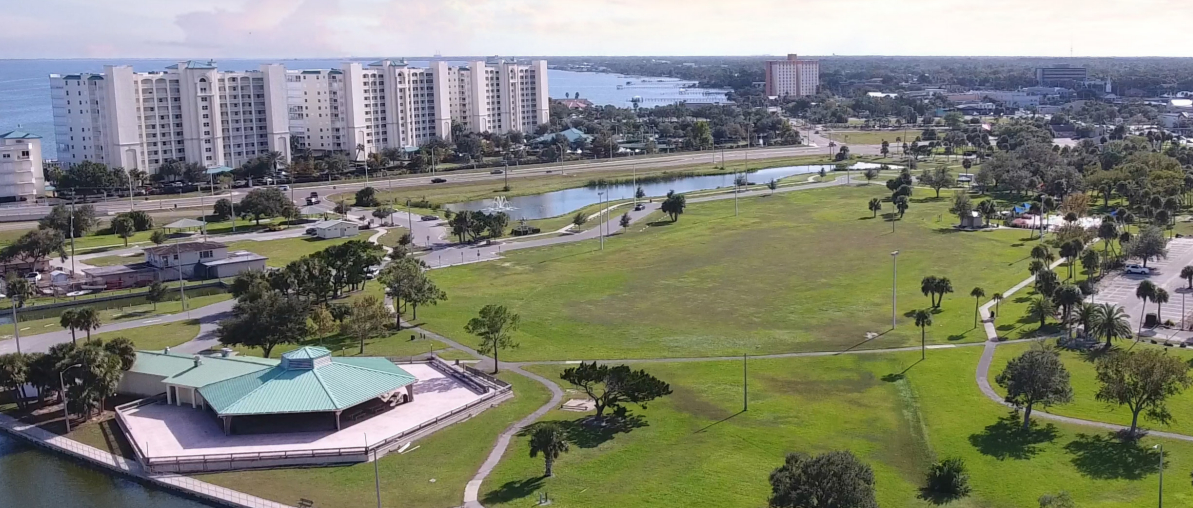


A Chinese tourist who flew a consumer drone from a Playalinda Beach parking lot in July is now facing federal charges after the aircraft climbed above the mangroves and recorded video of Kennedy Space Center. A criminal complaint was filed in Orlando in a case that began with a routine drone alert on a Saturday evening and ended with a family of four being escorted off federal property.


The charges, filed August 7 in the U.S. District Court for the Middle District of Florida under case number 6:26-mj-1933, charges He with violation of National Defense Airspace under 49 U.S.C. 46307 and operating an aircraft without an airman’s certificate under 49 U.S.C. 46306(b)(7). Both are misdemeanors. The complaint was sworn before U.S. Magistrate Judge Leslie Hoffman Price.
This is not the first time someone has been arrested for flying a drone over the Cape. We covered this story last year:
Drone Operator Pleads Guilty Unlawful Photography At Cape Canaveral SFS
According to an affidavit by NASA Office of Inspector General Special Agent Christine Beers, Kennedy Space Center Security Police responded to a drone notification on the evening of July 25 and found He operating a DJI Mavic 4 Pro at the Playalinda Beach Vista #8 parking lot. The lot sits inside restricted zone R-2932, the block of airspace that shields the Kennedy Space Center and Cape Canaveral Space Force Station complex from civilian overflight. Officers made contact at roughly 7:39 p.m.
Foreign espionage is a part of life around the Cape and so is counterespionage. We wrote about it earlier this year:
The Space Coast Is A Hot Bed For Foreign Spies

Flight records cited in the affidavit show the drone was airborne for 12 minutes and 24 seconds and reached a maximum altitude of about 230 feet. At its closest, the affidavit says, the aircraft came within 1.56 miles of Space Launch Complex 39B and 4.23 miles of the Rotation, Processing and Surge Facility — the building where solid rocket booster segments for the Space Launch System are stacked and stored.

He told officers he had recorded four videos and offered to let KSC Police watch them on the spot, according to the affidavit. Investigators wrote that the first clip showed the drone lifting off from the parking lot, climbing above the tree line and capturing Launch Complex 39A and 39B before turning north over the ocean, Playalinda Beach and the lagoon.
He was not alone. The affidavit says three family members were with him, and that the group told police they were visiting the United States on vacation and were recording scenery. One family member said they had not been aware of any drone restrictions in the area and offered to delete the videos.
The airman’s certificate count rests on paperwork that investigators say simply did not exist. He told police he held no operator certificate, and agents later confirmed with NASA and the FAA that there were no approved flights in R-2932 that day, no DroneZone authorizations or waivers, no LAANC approval, no Part 107 remote pilot license and no registration for the aircraft itself — neither as a recreational nor a commercial operation.
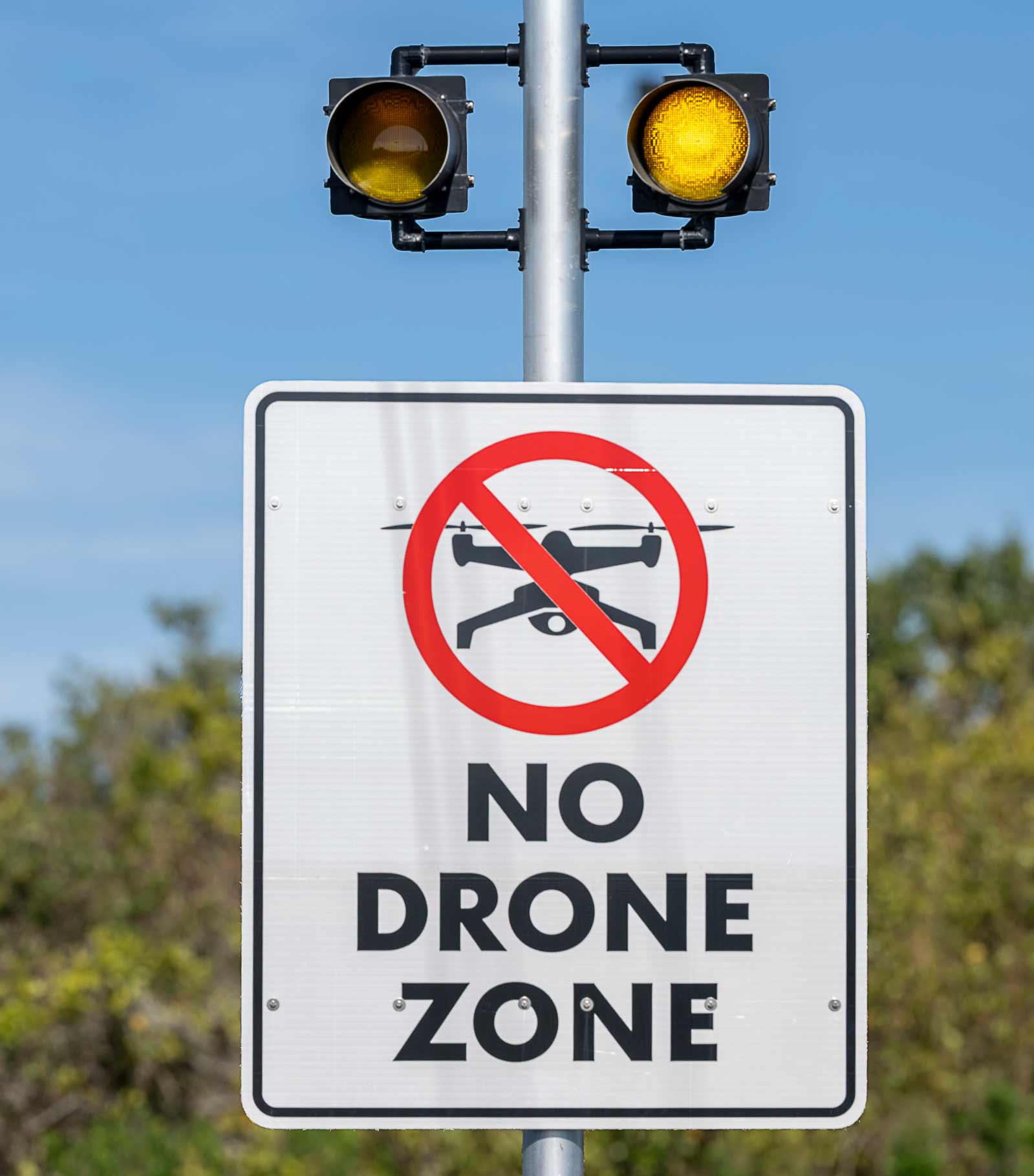
A preliminary forensic review of the drone’s controller undercuts the argument that the restriction was invisible. According to the affidavit, each time the aircraft launched that day the controller displayed an on-screen alert warning the operator that the drone was in a warning zone and advising caution. Investigators also included photographs in the filing of the “No Drone Zone” signage NASA posts at approaches on North Courtenay Parkway, the NASA Causeway and Titusville Road.
The field disposition was administrative rather than custodial. KSC Police seized the drone and controller, issued He a District Court Violation Notice for operating a drone over a critical infrastructure facility, issued trespass warnings to all four people and escorted them off the property. The affidavit notes the group told police they were scheduled to leave the country on August 8 from LaGuardia Airport — one day after the complaint was filed.
R-2932 is FAA-designated restricted airspace tied to national defense. Separately, the U.S. Fish and Wildlife Service bars launching, landing or operating unmanned aircraft anywhere on Merritt Island National Wildlife Refuge under 50 CFR 27.34 and 27.51, absent a Special Use Permit, and the National Park Service maintains its own prohibition across Canaveral National Seashore. A drone lifting off from the Playalinda access road can violate all three regimes at once. On the other end of the Cape complex, Port Canaveral, reported more than 500 unauthorized drone flights near port facilities in 2025.
He is scheduled to appear in federal court again September 18. A conviction on the charged offenses carries a statutory maximum of up to one year in jail per count, along with fines.
A criminal complaint is an accusation only; He is presumed innocent unless and until proven guilty in court.

Author: Charles Boyer
NASA kid from Cocoa Beach, FL, born of Project Apollo parents and family. I’m a writer and photographer sharing the story of spaceflight from the Eastern Range here in Florida.


Leave a Reply