

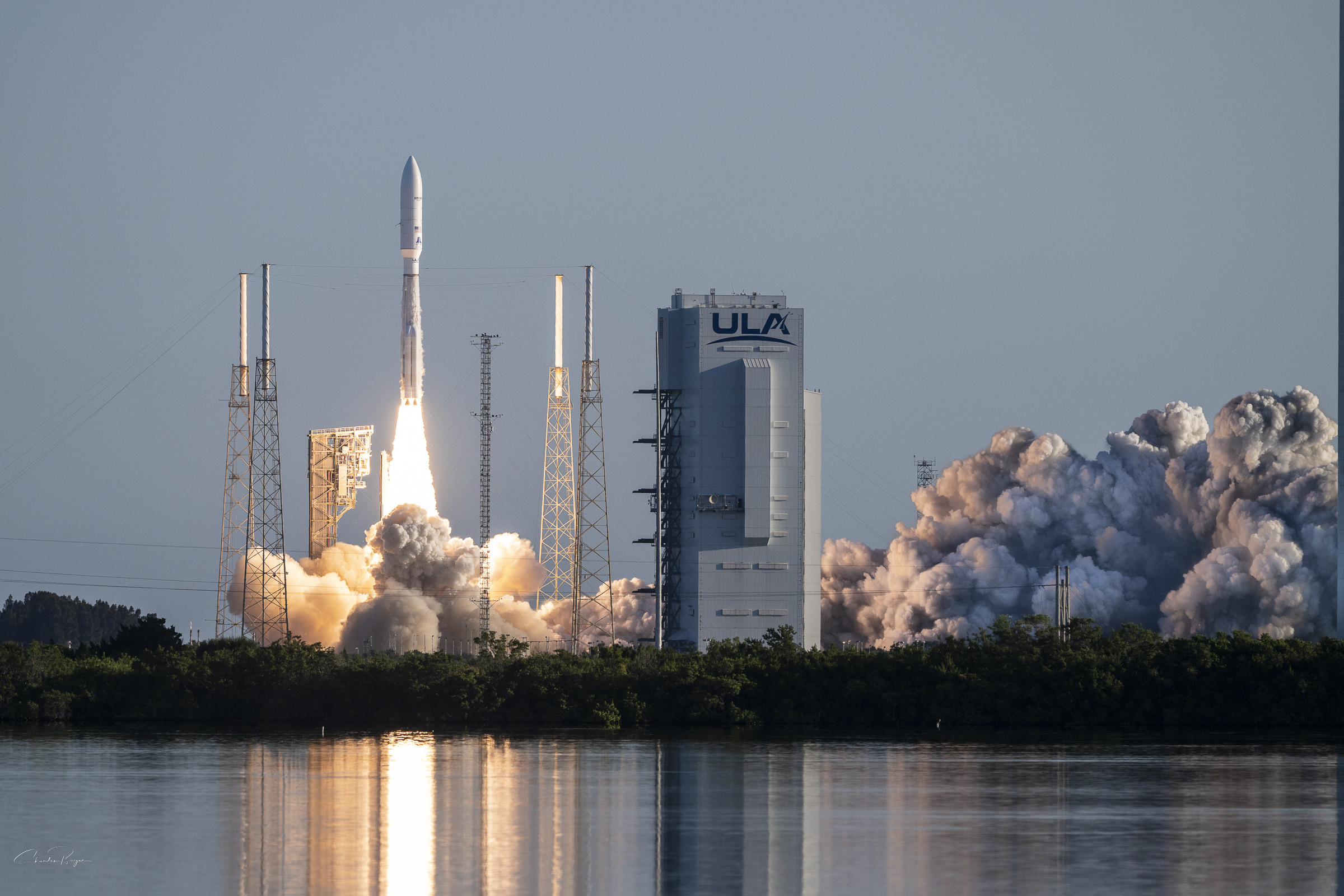
Photo: ULA
United Launch Alliance said Wednesday it plans to launch its Vulcan rocket Friday, November 13th, pending approval from range authorities, ending a nearly nine-month pause in flights. The mission, Vulcan Leo 1, will carry the next batch of production satellites for Amazon Leo, the broadband constellation formerly known as Project Kuiper. The launch will take place from Space Launch Complex 41 at Cape Canaveral Air Force Station.
The flight will mark several firsts. It is the first planned launch of Vulcan’s most powerful configuration, the first to use the shortened LEO-optimized Centaur V upper stage and the first Vulcan integrated in ULA’s new VIF-A facility. The rocket will fly with six solid rocket boosters. Another critical first is the return to flight of the Blue Origin BE-4 engine after the anomaly that immolated a New Glenn on its launch pad.

Vulcan has not flown since February 12th. It has been barred from national security missions since a Northrop Grumman GEM 63XL solid rocket booster nozzle anomaly on the USSF-87 flight, the second booster nozzle failure on the vehicle since its second test flight in October 2024. On February 26th, the Space Force announced it would fly no more national security missions on Vulcan until the investigation was complete.

ULA kept work moving during the stand-down. The company stacked the vehicle while the investigation continued so crews could run first-time operations, test ground systems and roll out for a wet dress rehearsal. Separately, Blue Origin has been retrofitting BE-4 engines in ULA’s inventory after an anomaly tied to a main oxygen valve in May.
Needless to say, this launch is critical for ULA. It is well behind its Vulcan launch manifest, and the company needs to get the rocket sorted and flying regularly.


Author: Charles Boyer
NASA kid from Cocoa Beach, FL, born of Project Apollo parents and family. I’m a writer and photographer sharing the story of spaceflight from the Eastern Range here in Florida.




Leave a Reply