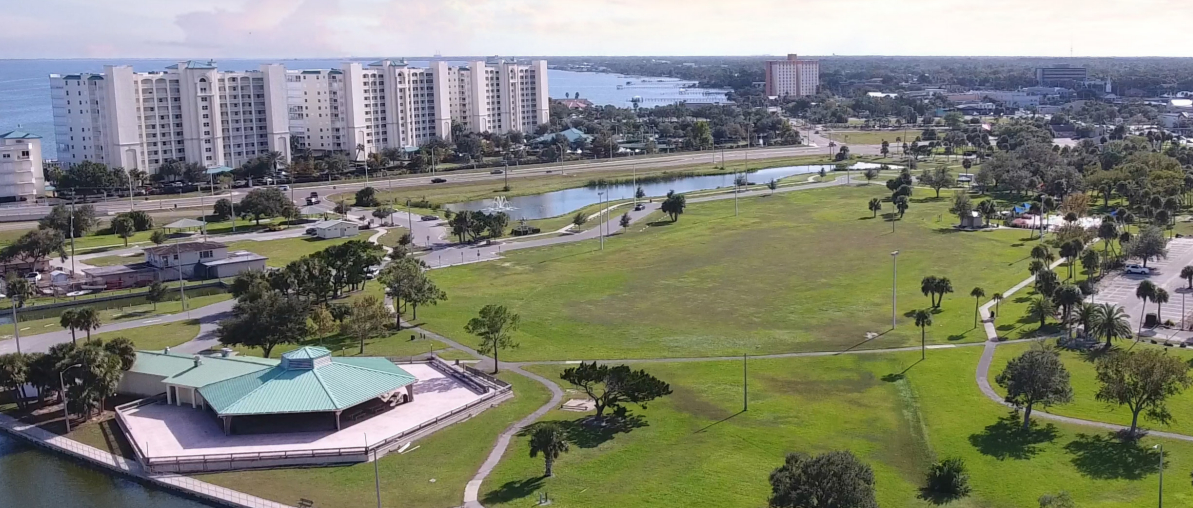

Following a series of intense summer workshops that took place on August 4th and 20th, the Titusville City Council finalized its Fiscal Year 2027 municipal budget during the Regular City Council Meeting on August 25th.


Council Member Sarah Nelson then made the motion directing staff to put the budget-workshop recordings on YouTube. The full 4+ hour budget workshop, where council discussed the budget line-by-line can be listened to at the video below. This article provides a summary into the discussions and actions Council made during both of those Public Budget Workshops.
Council members balanced a $180 million budget that successfully freezes property taxes at the roll-back rate of 6.0812 mills while approving a 13% increase in stormwater utility fees to maintain basic drainage operations. The final decisions represent a major shift from initial proposals presented in July, which had pitched a 1.9% property tax increase and a massive 100% doubling of stormwater fees.
Confronted with intense community pushback and economic concerns from residents on fixed incomes, the council and city staff executed a department-by-department review to harvest internal savings and “buy down” the proposed rate hikes.

The General Fund: How the Property Tax Freeze Was Achieved
Titusville’s $64.6 million proposed General Fund represents a 3.5% decrease from the previous year’s revised budget of $67 million. While the city’s property values have risen, the council reached a unanimous consensus to adopt the roll-back property tax rate of 6.0812 mills.

This represents the lowest property tax rate in Titusville in 18 years, and only the second time in a quarter-century that the city has set its millage at or below the roll-back rate.

Opting for the 1.9% roll-back rate instead of the initially proposed 6.2 mills created an immediate $453,000 revenue reduction in projected ad valorem taxes. To balance the budget without a tax hike, the city adjusted several revenue lines and enacted strict spending cuts:
Revenue Adjustments ($677,000 Recovered)
Delinquent Collections ($260,000): Projections for delinquent tax and tax certificate collections were increased by $260,000 after finance staff determined previous estimates had been overly conservative.
Community Development Fees ($417,000): Projections were raised by $417,000 based on historical multi-year averages. Staff maintained a buffer, setting this projection 25% below the five-year average to account for potential economic downturns and a new state law altering permitting fee methodologies effective January 1, 2027.
Meticulous Expense Reductions ($300,000 Harvested)
During a grueling four-hour line-item review on August 4, the council consolidated and trimmed $265,000 from departmental operating budgets, with another $35,000 trimmed from non-essential planning department adjustments:
City Council Travel ($10,000 cut): Travel allocations were trimmed from $25,000 to $15,000 after council members agreed that typical travel expenditures for municipal league conferences rarely exhaust the full budget.
Employee Health Fair ($10,000 cut): The annual health fair budget was cut from $11,000 to $1,000. Because local medical vendors participate for free and city rooms serve as venues, council members determined the historical cost was unnecessary.
Community Relations ($38,000 cut): The city immediately eliminated a $20,000 annual subscription for Flashvote due to low resident participation. Promotional advertising was cut by $9,000 (from $19,000 to $10,000) by transitioning away from expensive printed newspaper advertisements. Office supply allocations were also cut from $15,000 to $6,000, cancelling a proposed $9,000 purchase of a TV and couch set intended for video and podcast productions.
Code Enforcement Demolition ($90,000 cut): Shaved $90,000 off operating and demolition budgets after critics pointed out the city had not executed a building demolition in several years.
In-House Legal Success: The City Attorney’s office reported saving nearly $200,000 by bringing complex labor arbitrations and foreclosures entirely in-house. Consequently, the legal department’s professional services budget dropped from $162,000 revised to $88,000 for FY27.
The Stormwater Crisis: Why a 100% Rate Hike Was Proposed
The budget workshops took place under the shadow of Titusville’s immense stormwater infrastructure crisis. Public Works Director Sandy, who assumed her role the same week a catastrophic October storm dumped 15 inches of rain in six hours, outlined a massive system deficit.
Titusville’s public stormwater infrastructure is vast, consisting of:
– Nearly 8,000 structures and inlets
– 120 miles of pipes
– 27 miles of drainage ditches
– 20 baffle boxes and 13 stormwater ponds
– 18 outfalls discharging into the Indian River Lagoon
To maintain this entire network, the city relies on a severely constrained workforce of only 19 employees:
- 1 supervisor.
- 8 mowing crew members tasked with weed eating and slope mowing 25 miles of ditches. The process is highly labor-intensive, requiring manual weed eating in tight ditches, meaning it takes six to 12 weeks to complete a single citywide mowing cycle.
- 4 construction crew members (forming just one operational crew) to repair and replace all 120 miles of pipes and 7,000 structures. If two system issues develop simultaneously, staff must barricade one while repairing the other.
- 6 dredging crew members responsible for clearing sediment from the 25 miles of ditches and cleaning all baffle boxes and inlets.
Sandy explained that many of Titusville’s older neighborhoods were built before the state’s 1984 and 1989 stormwater regulations went into effect, meaning they were constructed with no retention ponds or formal drainage systems, and instead discharge into wetlands that are now holding higher water tables.
Assistant City Manager Kevin revealed that comprehensively repairing the city’s aging and failing drainage systems would carry a staggering backlog cost of $500 million to $750 million.
To begin aggressively funding capital construction for 22 identified high-flood areas, staff initially proposed a 100% increase in the stormwater utility assessment, doubling the rate from $160 to $320.88 per Equivalent Residential Unit (ERU).
The Stormwater Rate “Buy Down”: Reaching the 13% Increase
The proposed 100% stormwater rate doubling triggered intense backlash from residents and local organizations:
Pastor Tim Ellison of Way of Life Baptist Church testified that their annual stormwater assessment would have skyrocketed to $2,730.15 under the 100% proposal, up from $400 a decade ago.
Resident Stephen Amato, who relies on Social Security, pleaded with the council, noting his annual benefit check increased by just $8 this year while his personal insurance rose by $9, meaning any major fee hike would force direct sacrifices on food.
- Historical Rate Hikes: Resident Louie presented data showing that from 2018 to 2025, Titusville’s stormwater fees had already surged 83% (from $86 to $160), vastly outpacing a 30% inflation rate and a minuscule 0.47% population growth over the same period.
Confronted with these realities, the City Council rejected the 100% doubling and worked with staff to “buy down” the rate using the newly harvested general fund savings.
The Mechanics of the 13% Rate Assessment
To achieve a lower rate, the council reduced the stormwater administrative transfer fee paid to the general fund by $223,000. This transfer—historically paid by utilities to the general fund to cover shared overhead services like HR and finance—was trimmed to leave more operational funding directly within the stormwater department.
By utilizing this $223,000 administrative fee reduction, the council successfully bought down the required rate hike from an 18% operational necessity to exactly 13%.
On August 25, 2026, the City Council voted 5-0 to adopt Resolution 18-2026, establishing the finalized stormwater utility rate at $181.30 per ERU. For residents, this translates to:
- An annual increase of $21.30.
- A monthly increase of $1.74 for standard single-family homes with no retention credits.
- A monthly increase of $1.22 for single-family homes receiving a retention pond credit.
Crucial Stormwater Funding Limitations
Public Works Director Sandy and council members emphasized that the approved 13% stormwater rate increase generates $0 in capital funds for new flood-control construction. The rate strictly covers:
- Current basic maintenance and operations.
- A new state DEP permit mandate requiring the city to proactively inspect 20% of its stormwater system annually.
- Financing for a highly specialized $700,000 walking excavator. The equipment, financed at $120,000 per year over seven years, is capable of climbing directly into deep, narrow ditches situated between residential properties that current city machinery cannot access.
The Audit Mandate and Future Capital Strategy
To address deep community skepticism regarding where historical stormwater fee increases have gone, the City Council voted 5-0 to approve a secondary motion directing the internal auditor to immediately execute a comprehensive, independent audit of the stormwater utility fund. City Manager Tom confirmed the audit would begin immediately following the completion of an active take-home vehicle audit.
Because the 13% rate cannot fund major drainage projects, the council established a multi-pronged funding strategy to tackle the $20 million short-term capital needs:
Surplus Redirection ($220,000 Approved): The council voted to allocate $220,000 of the $300,000 general fund surplus directly to Public Works. This money will fund the environmental assessments, engineering, and design for two or three priority flood-mitigation projects.
“Shovel-Ready” Grant Strategy: Getting these projects engineered and designed is a critical prerequisite. State and federal infrastructure grants are strictly awarded to “shovel-ready” designs; by funding the engineering upfront, Titusville can aggressively lobby for outside construction grants.
Future Stormwater Bond Referendum: Because local tax and utility rates cannot cover the multi-million-dollar construction costs, the council discussed placing a municipal bond referendum on the 2028 ballot. This would allow voters to decide on floating a bond to fund comprehensive drainage overhauls once the city’s ongoing 18-month Stormwater Master Plan is finalized at the end of 2027.
Long-Term Workforce and Cost-Control Strategies
To brace for a potential state constitutional amendment (“Amendment 3” on the November ballot) that could slash Titusville’s annual ad valorem revenues by over $5 million starting in FY28, the city’s executive “Tiger Team” is accelerating plans to reduce personnel costs, which currently consume two-thirds of the operating budget.
A strict hiring freeze is currently in effect across the city. Other cost-control measures integrated into the FY27 budget include:
Harry T. Moore Center Transition: The council agreed to release a Request for Proposals (RFP) in September to transition operations of the center to local non-profit organizations. While social services will be preserved, the non-profit tenants will assume building maintenance and utility costs, saving the city $300,000 in annual overhead that will be redirected entirely to stormwater engineering.
Healthcare Plan Restructuring: The city’s self-insured employee healthcare program faced a 22% ($1.69 million) stop-loss insurance renewal premium increase due to rising claims. To protect municipal workers, the council agreed to absorb the premium increases, ensuring zero increase in employee payroll deductions for FY27. To offset the budget impact, the plan’s design was restructured to save $350,000 by increasing base plan deductibles (+$500 individual / +$1,000 family), raising emergency room co-pays, moving biometric screenings to the on-site clinic, and implementing voluntary cost-saving surgery (“Lantern”) and international pharmacy sourcing programs.
Consolidation Feasibility Studies: The city has opened preliminary negotiations to potentially consolidate its 911 dispatch with the Brevard County Sheriff’s Office, which could save upwards of 20 FTE positions and $2 million annually. On September 8, the council will also consider piggybacking on Ocoee’s outsourced contract for fire inspections, saving four FTE positions.
All staffing reductions are mandated to occur strictly through natural attrition and internal transfers; City Manager Tom emphasized that involuntary layoffs are not being considered.
Formal public hearings to adopt the final General Fund millage rate, the proposed water/sewer utility rate increases of 6%, and the solid waste rate increase of 8% will take place during two scheduled council meetings in September.
You can read the Full Budget document on the city’s website: https://titusville.com/408/Budgets



Leave a Reply