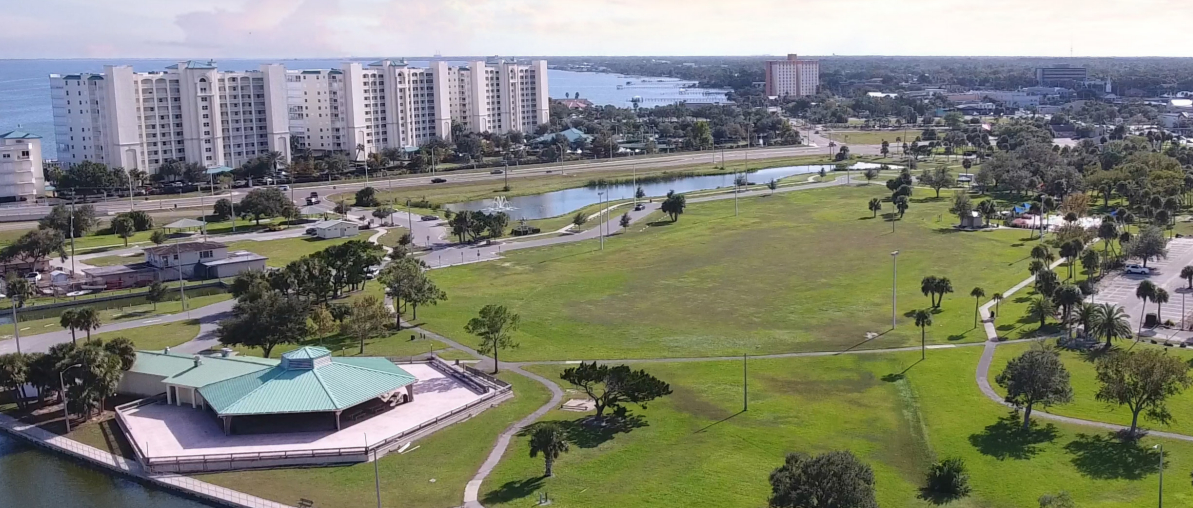


Before SpaceX attempts a launch of Starship Heavy from Kennedy Space Center, the company must file paperwork with different departments of the federal government as well as set up monitoring on some historical structures here in Titusville. That makes the monitoring program and paperwork filings among the best signals that Florida’s first Starship launch is coming sooner rather than later, with some filings due 90 days before launch.


Florida may matter more to SpaceX in the near term than many expected. The same report said the original launch pad at Starbase in Texas is not expected back in service until next year, leaving 39A as the program’s second active pad. SpaceX is also building two Starship pads at Space Launch Complex 37 on Cape Canaveral Space Force Station, where the Space Force has approved up to 76 launches a year once the FAA finishes an additional airspace review.
As of the time of this writing, SpaceX has not announced any launch or static-fire dates of Starship here in Florida.
The Obvious Sign
For there to be a Starship launch or test from the Cape, there has to be a Starship at the Cape. To date, none have arrived, and SpaceX has not officially announced when it will send one from its Boca Chica, Texas, facility. A Starship arrival is likely to come through Port Canaveral, and it’s pretty to guess that it will draw crowds to watch the ship come in, just as people lined the beaches and piers to see Blue Origin’s first New Glenn first stage when it returned to the Port.
Where Things Stand Today
The FAA’s decision supports licensing SpaceX for up to 44 Starship launches and 88 landings a year from 39A. That total counts one booster landing and one ship landing for each launch. The environmental approval alone does not guarantee a license, and the FAA said the operation must still meet its safety, risk and insurance requirements.

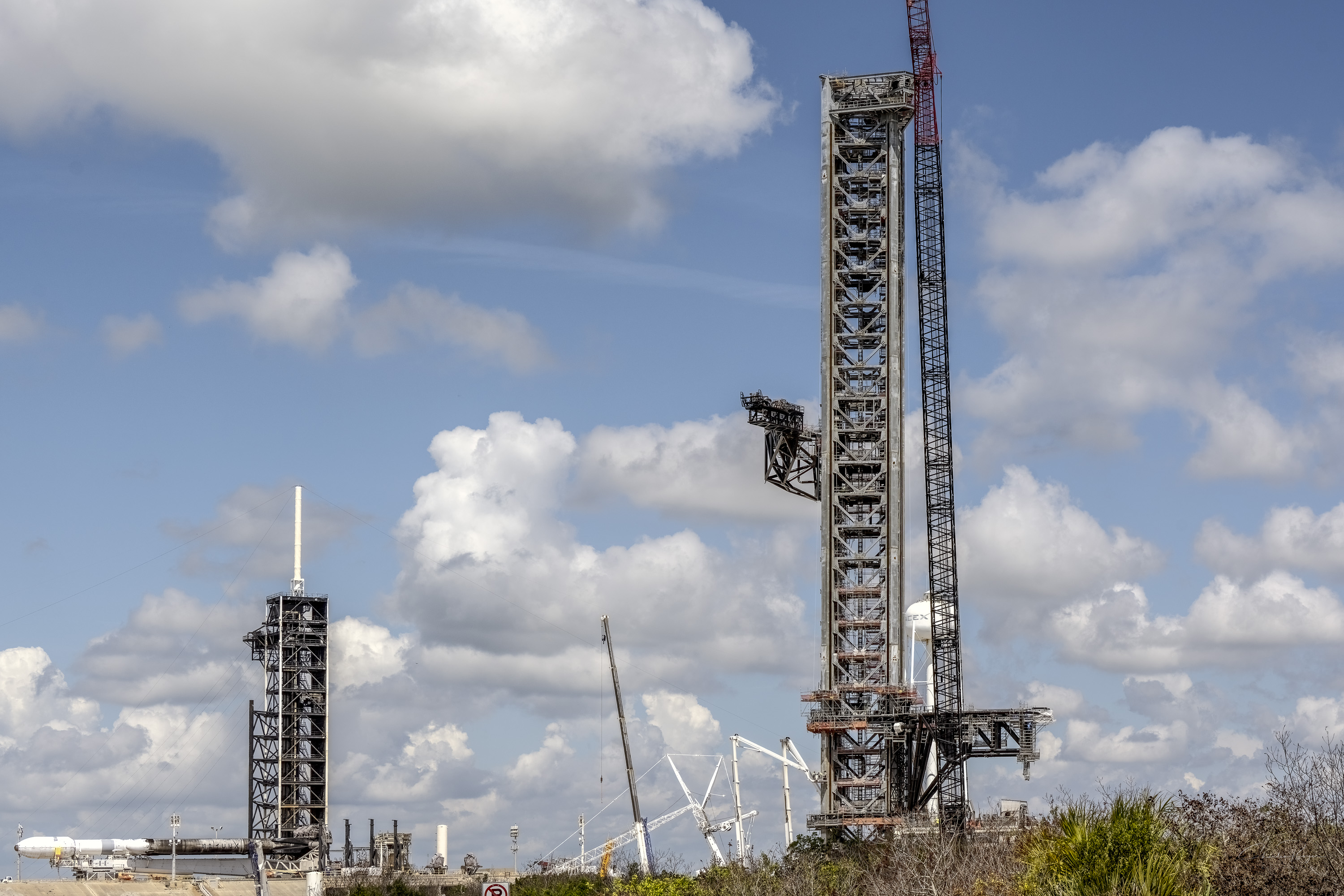
The pad itself is nearly finished. NASASpaceflight reported on September 1 that crews were preparing to lift a hardened roof onto the tower, a feature needed to catch the ship upper stage. Remaining work included testing the ship side of the propellant farm, and the liquid oxygen pumps for the ship had not yet been installed.

What To Watch For
This is a partial list of things for residents to watch out for as the launches draw nearer:
| Milestone | Why It Matters |
|---|---|
| Starship Flight 14 from Texas | Expected NET September 22nd. The flight could provide an important indication of Starship’s technical readiness and the maturity of the vehicle SpaceX eventually intends to operate from Florida. Notably, SpaceX COO Gwynne Shotwell has said launches from Florida could happen as soon as Flight 15. |
| Monitoring Plans & Baseline Assessments | Required environmental monitoring plans and baseline assessments must be completed before the first Starship Raptor engine ignition at Launch Complex 39A. |
| FAA License Modification | SpaceX will need the appropriate Federal Aviation Administration license modification authorizing Starship operations from Launch Complex 39A. |
| First Cryogenic Test or Static Fire | The first cryogenic loading test or static-fire attempt at the Florida pad would mark a major transition from construction and activation work to actual vehicle testing. |
| Seashore & Refuge Closure Notices | Closure notices from Canaveral National Seashore and the Merritt Island National Wildlife Refuge could provide an early public indication that hazardous testing or other significant Starship activity is approaching. |
What You’ll Hear
The FAA expects outdoor noise from Starship launches to top 97 decibels at representative locations outside KSC and the Cape. That is well above the level the agency considers likely to interrupt everyday activities, though it found engine noise would stay below hearing-damage thresholds outside federal property. Starship’s Super Heavy booster flies on 33 Raptor engines, and the FAA analysis shows it will be noticeably louder than the Falcon launches Titusville is used to.
What is a Decibel Anyway?
A decibel (dB) is a logarithmic way of expressing how strong a sound is. It is not a fixed quantity of sound by itself; it describes a sound level relative to a particular reference. And it gets more complex from there.
The decibel scale is logarithmic, so each step represents a multiplication of sound energy rather than a simple addition. Every 3 dB increase doubles the sound energy and every 10 dB increase multiplies it by 10, yet our ears perceive that 10 dB jump as only about twice as loud. That means a 97 dB Starship launch carries about 10 times the sound energy of an 87 dB noise and would sound roughly twice as loud.

Many of these launches will happen while people are asleep. The FAA plan calls for roughly half of launches between 10 p.m. and 7 a.m. During those late-night events, the agency estimated the chance of being awakened indoors could reach 82%.
The FAA singled out veterans with post-traumatic stress disorder, children with autism or sleep disorders and elderly residents as groups that could be hit hardest by nighttime noise. For those households, advance notice may make the biggest difference.
Static fire tests will add to the noise calendar. SpaceX has also filed permits for Project Ignition, a Starship static fire facility at its Roberts Road campus that would sit closer to Titusville and Port St. John than the pad.
Sonic Booms and Your House or Business
Boosters and ships returning to land at or near the pad will produce sonic booms. The FAA found boom levels would be high enough across 28,595 acres of land outside KSC and the Cape that noise-sensitive uses such as homes are not considered compatible under federal guidelines. Booms stronger than 4 pounds per square foot are expected in parts of Merritt Island, though the agency said those would be infrequent.
St. Gabriel’s Episcopal Church, the Pritchard House and the Walker Hotel and Apartments at 302 S. Washington Ave. are on a short list of historic structures SpaceX must monitor for vibration and sonic boom effects. The requirement is part of the Federal Aviation Administration’s Record of Decision for Starship at Launch Complex 39A, released January 30th. SpaceX must complete a baseline structural assessment of each site before the first scheduled engine ignition at the pad.

Photo: City of Titusville
That makes the monitoring program one of the better signals of when Florida’s first Starship launch is actually close.
The FAA considers significant damage to historic buildings unlikely. It also noted that structures that are poorly maintained or already damaged may be more vulnerable.
That is where the monitoring program comes in. Besides the three Titusville sites, the list includes the Cocoa Junior High building and the Aladdin Theater building in Cocoa, which also sit in the 2 psf zone, and the Cape Canaveral Lighthouse in the 4 psf zone.
Monitoring must run continuously through the first five Starship launches from 39A. It continues after that until at least five booster landings and one ship landing have been recorded. SpaceX must file a report within 30 days of each monitored event, and those reports go to the agencies and consulting parties that signed the historic preservation agreement.
As a condition of its license, SpaceX must carry insurance covering third-party claims from licensed activities, including structural damage. Claims are subject to the policy terms and the Commercial Space Launch Act.
Homeowners Should Take Action Now
Homeowners concerned about damage may want to photograph and date existing cracks in walls, foundations and windows now, before Starship operations begin. Proving that structural damage is new and not present prior to Starship flights will be critical to any future claim.
Starship sonic booms are already a legal issue in Texas, where 81 homeowners near Starbase have sued SpaceX over damage they blame on test flights. That case could shape how similar claims are handled here and bears monitoring.
Playalinda and The Refuge
Playalinda Beach will be one of the most visible local opportunity costs. The FAA’s draft environmental statement projected 33 to 44 full-day closures and up to 33 half-day closures a year, equal to about 60½ days.

The National Park Service could lose $239,000 to $423,000 a year in entrance fees, an estimated 13% to 24% of revenue. The FAA acknowledged the park service may consider that a significant hit to its operations. It recommended advance public notice of launch schedules so visitors can plan around closures.
Playalinda vistors got a preview during Artemis II. It ran shortened hours, closed parking areas 1 through 3 and closed the beach south of area 4 while the rocket sat on the pad. Starship closures are expected to tie to individual launches and landings rather than a months-long campaign, but they could happen dozens of times a year.
The monitoring rules also create a clock residents can watch. Several required noise, vibration and wildlife monitoring plans must go to the U.S. Fish and Wildlife Service for review 90 days before the first scheduled engine ignition at 39A. Whether those plans have been submitted is one of the clearest signs of how close the first Florida launch really is.
There is also another check on closures that has received little attention. Before any closure takes effect, it must be reviewed and approved by the director of the National Park Service and the assistant secretary of the Interior for Fish, Wildlife and Parks under Secretarial Order 3426.
Talk of Titusville first examined the Playalinda question when the draft statement was released in 2025.
Roads, Boats And Flights
Safety closures for tests, launches and landings could add up to nearly 10% of the year, according to the FAA. The agency estimated up to 396 hours for static fire tests and 462 hours for launches and reentries, split about evenly between day and night.
Roadblocks stay in place until propellant is unloaded from the vehicle. That means a scrubbed launch can keep roads closed long after the launch window ends.
Boaters and anglers will see more hazard areas offshore and on nearby waters, announced through Coast Guard notices to mariners. The FAA said shipping lanes would not be closed.
Air Travel Will Be Impacted
Travelers should expect effects at the airport too. The FAA said launches and landings may require ground stops and reroutes at major Florida airports. It estimated average delays of about 40 minutes for launches, with some reaching two hours, and about 40 minutes for reentries, with a maximum of an hour.
Spectators
With Playalinda and large parts of Merritt Island National Wildlife Refuge expected to close on launch days, Titusville’s riverfront and the Max Brewer Bridge will likely be among the closest public viewing areas.
Talk of Titusville will publish a Starship viewing guide with maps, distances and sound arrival times before the first Florida launch.

Author: Charles Boyer
NASA kid from Cocoa Beach, FL, born of Project Apollo parents and family. I’m a writer and photographer sharing the story of spaceflight from the Eastern Range here in Florida.

Leave a Reply