

SpaceX is set to launch three of the largest commercial satellites ever built for low Earth orbit early Wednesday, with liftoff targeted for 3:42 AM EDT from Space Launch Complex 40 at Cape Canaveral Space Force Station.


The Falcon 9 will carry BlueBird satellites 11, 12 and 13 for AST SpaceMobile, the Texas company building a cellular network that connects directly to ordinary smartphones. The launch window runs until 5:18 AM. If the mission does not fly Wednesday, SpaceX has a backup window that opens at 3:21 AM Thursday.
At A Glance
BlueBird 11-13 Launch At a Glance
Go for Launch
| Launch Date | Wednesday, August 5, 2026 |
|---|---|
| Launch Window | 3:42–5:18 a.m. EDT |
| Mission | BlueBird 11-13 (Block 2 #6-8) |
| Launch Provider | SpaceX |
| Rocket | Falcon 9 Block 5 |
| Launch Site | Cape Canaveral Space Force Station, Florida |
| Launch Pad | Space Launch Complex 40 (SLC-40) |
| Destination | Low Earth Orbit |
| Payload | Three AST SpaceMobile Block 2 BlueBird satellites designed to provide direct-to-device cellular broadband service. |
| Satellite Capacity | Up to 10 times the bandwidth capacity of the BlueBird Block 1 satellites, with support for voice, data and video applications. |
| Peak Data Speed | Up to 120 Mbps using beams supporting as much as 40 MHz of capacity. |
| Communications Array | Each satellite features a communications array as large as 2,400 square feet. |
| Status | Current liftoff time confirmed by official or reliable sources. |
Payload
The payload consists of three Block 2 BlueBirds, designated FM6, FM7 and FM8, with a combined mass of 13,500 kilograms. Each carries a phased-array antenna measuring roughly 2,400 square feet when unfolded in orbit. That is more than three times the array area of the company’s first-generation satellites, which measured about 693 square feet.
AST SpaceMobile says the Block 2 design is built to deliver up to 10 times the bandwidth capacity of the Block 1 satellites. Individual beams are designed to support as much as 40 MHz of spectrum, which the company says allows peak data rates up to 120 Mbps for voice, data and video. The Block 1 satellites already in orbit have demonstrated peak download speeds of 98.9 Mbps directly to an unmodified phone, according to the company.
The satellites use a stackable architecture built around lightweight composite carbon structures. That is what allows three multi-ton spacecraft to nest inside a single Falcon 9 fairing rather than flying one at a time.

Booster
The Falcon 9 first stage supporting this mission is B1077, flying for the 30th time. Its history includes Crew-5, a GPS III mission, Inmarsat-6 F2, CRS-28, Galaxy 37, CRS NG-20, Optus-X, and more than 20 Starlink flights.
The booster is set to land on the droneship A Shortfall Of Gravitas, stationed roughly 640 kilometers northeast of the launch site in the Atlantic. That means no return-to-launch-site sonic booms over Brevard County, so residents in Titusville, Merritt Island and the beaches can expect a quiet predawn beyond the launch itself.
Online Viewing
SpaceX will have a livestream of the launch on their website: Bluebird 8-10. This will also be available on the X platform. Coverage starts about fifteen minutes before liftoff.
Spaceflight Now will have coverage of the launch starting about one hour before liftoff on Youtube: link

For official updates regarding launch times, SpaceX.com is the best source of information.
Next Space Flight an app for iOS and Android phones, has a real-time countdown clock that is accurate to a second, give or take. The app is free. Search the App Store or Google Play. They are also on the web: nextspaceflight.com.
Viewing In Person
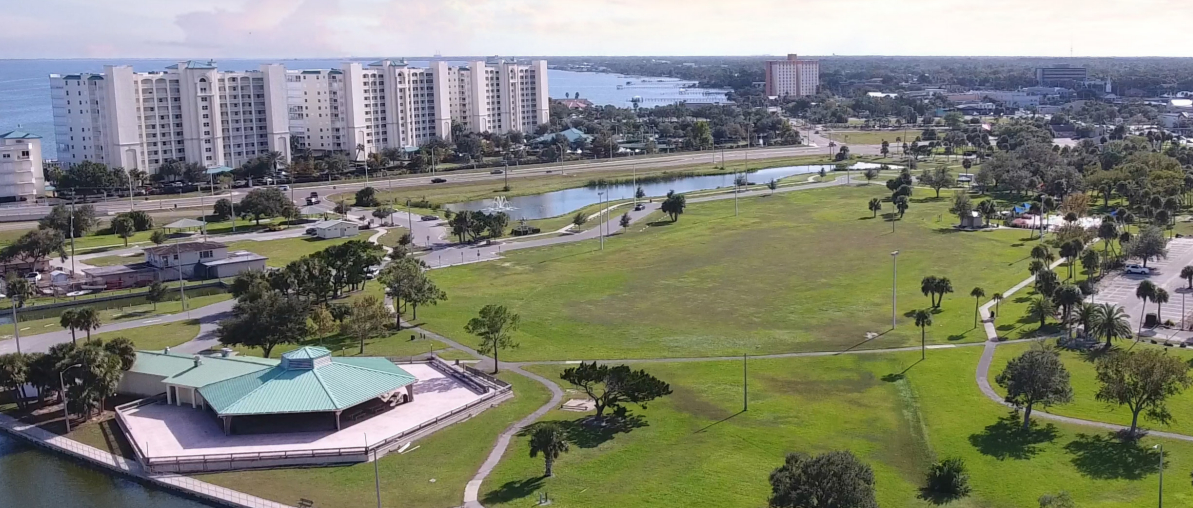
The best free options are available for spectators: Northern Titusville parks on Washington Avenue / US-1, For example, Space View Park, Sands Park, Rotary Riverfront Park.
Playalinda Beach will be closed. It opens at 6 AM and closes at 8 PM. The Kennedy Space Center Visitors Center will also be closed, so there is no on-site viewing available to the public.

Author: Charles Boyer
NASA kid from Cocoa Beach, FL, born of Project Apollo parents and family. I’m a writer and photographer sharing the story of spaceflight from the Eastern Range here in Florida.


Leave a Reply