

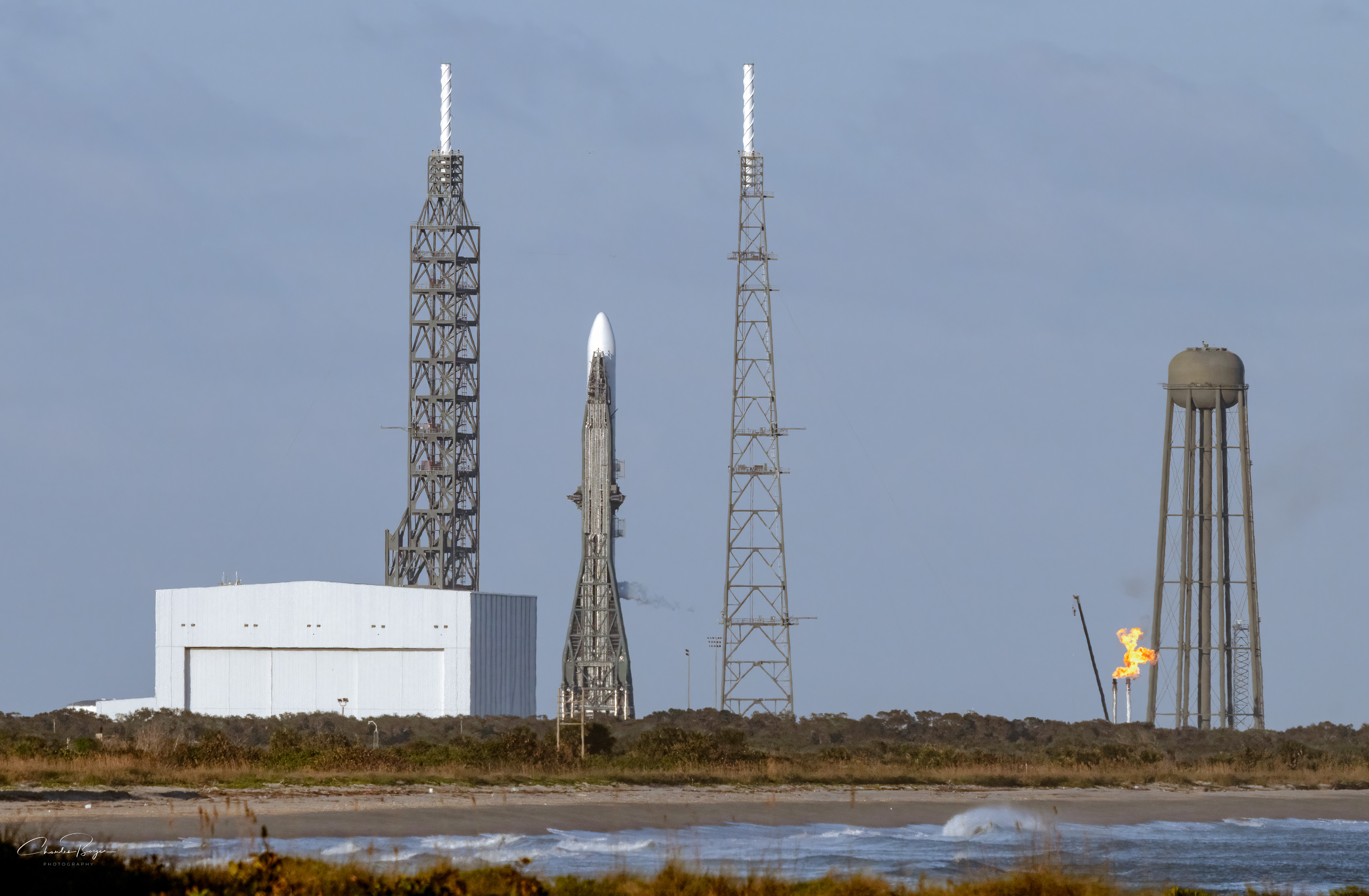
Blue Origin’s Launch Complex 36 at Cape Canaveral Space Force Station sustained heavy damage when a New Glenn rocket exploded during a static fire test on Thursday evening. The blast occurred at about 9 PM EDT as the vehicle’s seven BE-4 engines ignited for the test, which was being conducted in preparation for a launch planned for early June to carry 48 Amazon Leo internet satellites.

Space Force and Blue Origin’s safety rules worked precisely as intended, an no loss or life or injuries were reported as a result of the incident. As is standard for launch operations and static-fire testing, the area had been evacuated beforehand, which surely prevented human tragedy from happening.
What We Know, And What We Don’t
The full extent of the damage has not been formally released by Blue Origin or any other authoritative source, such as the Space Force. Based on helicopter and ground imagery published by the press in the days after the explosion, the following is what reporting has established so far:
The rocket itself was destroyed, along with its transporter-erector, the structure used to move New Glenn from its hangar to the pad and rotate it vertical. Blue Origin’s standalone lightning tower was toppled. CBS News reported that both the lightning tower and the transporter-erector were visible the following morning as charred piles of debris. The main gantry remained standing but appeared to have suffered structural damage near its base. Almost certainly, all will need to be replaced prior to the next launch.
It is not yet clear publicly whether the pad’s propellant tanks, feed lines, sound-suppression water system or the New Glenn processing hangar were severely damaged. That assessment is central to how long reconstruction will take, and it has not been disclosed as of this writing. Visually, it looks as though most if not almost all of that equipment survived relatively intact, but examining a photograph made at least 5,000 feet away is not conclusive. Ground inspection will tell the tale of the tape.

A Pad Rebuilt Once Already
LC-36 is no stranger to reconstruction. The complex was the former home of more than 140 Atlas launches before standing vacant after the Atlas program moved to SLC-41 in 2005. Blue Origin acquired the lease in 2015 and, by its own account, invested more than $1 billion to rebuild the site from the ground up, completing the work in 2021. The company has described LC-36 as the first newly rebuilt launch complex at the Cape since the 1960s.
New Glenn flew three times from the pad before the accident: the debut Blue Ring mission in January 2025, a second flight, and a third in April 2026 that landed its booster but lost the upper stage to a cryogenic failure that doomed the AST SpaceMobile Bluebird 7 satellite.
How Long Could It Take
No firm timeline has been issued and anyone’s estimates are little more than guesswork. The closest precedent is the September 2016 explosion of a SpaceX Falcon 9 during a hotfire at the neighboring SLC-40, which also destroyed the rocket and severely damaged the pad. SpaceX resumed Falcon 9 flights about three and a half months later from other pads, but returning SLC-40 itself to operational status took nearly 15 months.
That comparison carries an important caveat for Blue Origin. SpaceX had other pads to fall back on during the SLC-40 rebuild. Blue Origin does not. While the company plans to build a second pad at Cape Canaveral and another at Vandenberg Space Force Base in California, those projects have not yet gotten underway. Talk of Titusville reported in April that Blue Origin had filed documents pointing toward a second pad incorporating the former LC-11 engine test site, but that work remains in the planning and paperwork stage and is by no means shovel-ready.
Talk of Titusville will always be free to access.
If you love what we’re doing, please consider becoming a monthly Supporter HERE.
CBS News space consultant William Harwood cautioned that early damage assessments made from a distance are often overly pessimistic, and that given Bezos’ resources, Blue Origin may return to flight faster than a worst-case reading would suggest, depending on what a detailed inspection reveals. The actual reconstruction timeline will depend on the findings of that assessment, which had not been released as of this writing.
What Key Figures Have Said
Blue Origin founder Jeff Bezos addressed the loss directly. In a post on X, he said it was too early to know the root cause but that the company was already working to find it, calling it a very rough day while pledging to rebuild whatever needed rebuilding and get back to flying.
NASA Administrator Jared Isaacman, whose agency is counting on New Glenn to launch Blue Moon lunar landers for the Artemis program, said on X that NASA was aware of the anomaly, that spaceflight is unforgiving and developing new heavy-lift capability is extraordinarily difficult, and that the agency would support a thorough investigation and assess near-term mission impacts.
A notable message of support came from a competitor. Kiko Dontchev, SpaceX vice president of launch, posted on X:
“Thinking about the entire team at Blue. We’ve been there before and there are very few things worse than losing a vehicle on the pad. Remember @blueorigin, it’s the darkest before the dawn and you will be measured not by this anomaly, but by how you respond. We are all rooting for you to get safely back to flight as soon as possible!”
Dontchev, sentiments echo a number of SpaceX employees who took to social media to express their condolences. Unlike nearly anyone in the general public, they know the feeling of losing a rocket and losing a launch site as a result of the anomaly, because that’s exactly what happened to SpaceX after the second stage of Falcon 9 failed prior to a static fire in 2015.
SpaceX’s Kate Tice, whom many viewers know from watch SpaceX launch and missions streams, said that “I’ll never forget the feeling of losing Amos-6 on the pad and my heart goes out to the Blue Origin teams. It’s a sad day, but hang in there.”
You’ll [find the] root cause and get back to the skies even stronger, soon.”
How long that will be remains to be seen.

Author: Charles Boyer
NASA kid from Cocoa Beach, FL, born of Project Apollo parents and family. I’m a writer and photographer sharing the story of spaceflight from the Eastern Range here in Florida.


Leave a Reply