


Dave Limp, Blue Origin’s CEO, has outlined the reason behind the May 28th explosion of the New Glenn that was being hot-fired prior to its launch several days later: a failure of the main oxygen valve on one of the rocket’s seven BE-4 engines.


“Wanted to give an update on the hotfire anomaly investigation. Progress continues. The anomaly originated at the main oxygen valve on one of the BE-4 engines, which was later confirmed by hardware recovery and inspections. Extensive component-level and engine hotfire tests have been conducted to understand the failure mode better and inform mitigations. The path forward is clear. We’re making small modifications to the valve that can be quickly retrofitted to existing engines. We’re manufacturing the updated hardware, which will be ready by the end of this month. In parallel, we’re working through the remaining fault tree analysis.” — Dave Limp, CEO of Blue Origin, August 5, 2026
Et Tu, United Launch Alliance?
No one, save for Blue Origin itself, is more interested in the results of the NG-4 root cause analysis than is United Launch Alliance. The BE-4 is at the heart of its Vulcan rocket, which is intended to move the company past the Atlas V era and serve as its heavy lifter for the next decade or more.
It’s fair to say that, had Vulcan not already been grounded due to issues with the Northrop Grumman GEM-63XL solid rocket boosters, it would have been grounded during Blue Origin’s investigation.

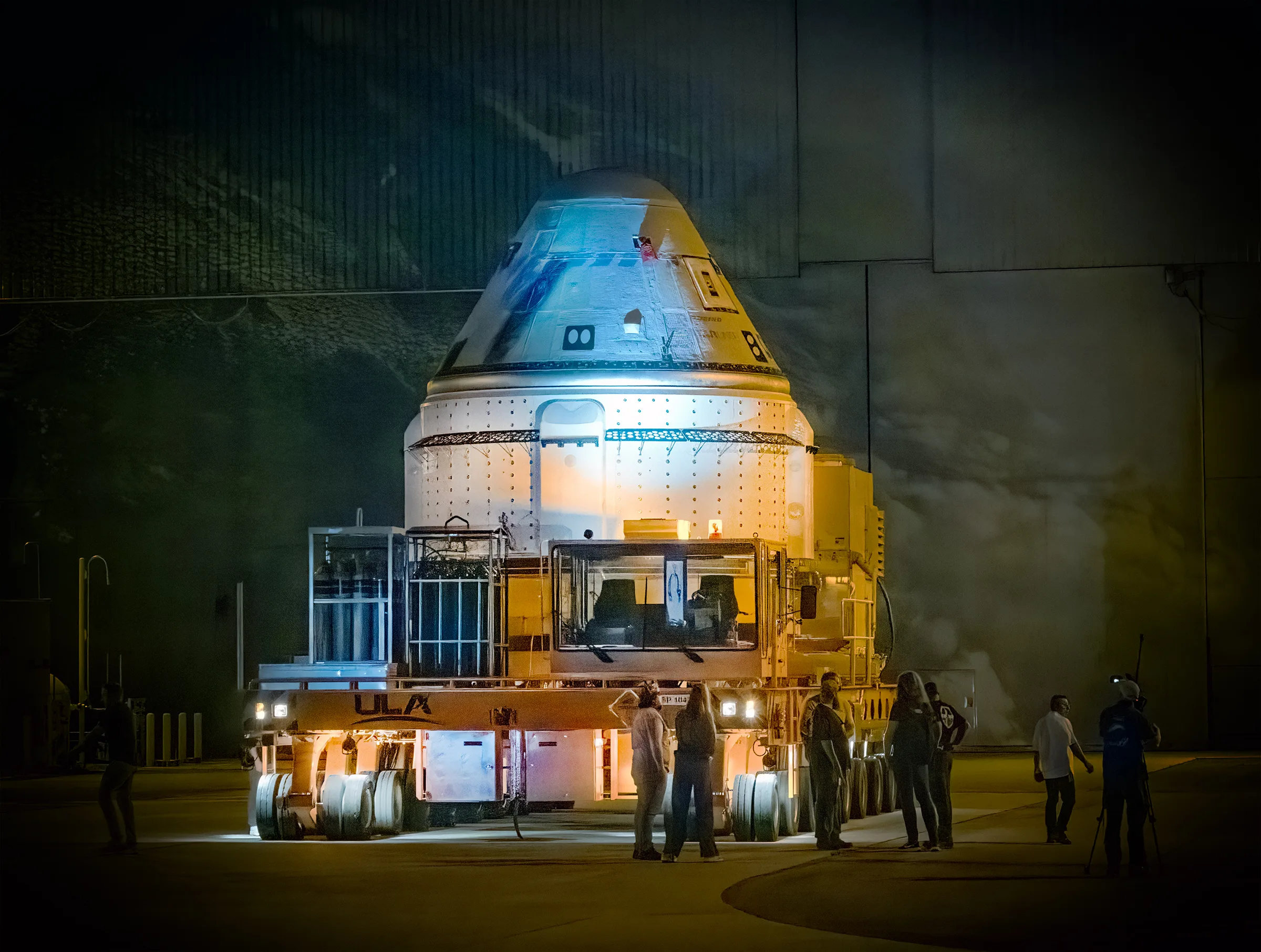
Photo: Charles Boyer / Talk of Titusville
At this time, ULA has not made any public comments on Limp’s statement or on whether they will conduct any additional testing of their already-purchased BE-4s prior to Vulcan’s next flight, currently planned for late Q4 2026 or early Q1 2027.

Artemis Project
Core to the current Artemis plans to return humans to the lunar surface is Blue Origin’s lander, is the Blue Moon family of spacecraft. It features the Blue Moon Mark 1 (MK1) cargo lander and the larger Blue Moon Mark 2 (MK2) human-rated lander, both of which depend on New Glenn for their ride to space.
NASA Administrator Jared Isaacman outlined what he called a “whole of government response” to the May Blue Origin incident in a FOX Business interview in June. “We are also de-coupling the lander from the launch vehicle and the pad itself,” Isaacman said then.
Thus far, no plans to move the launch of the two lunar landing vehicles away from New Glenn have been announced, but that could change if New Glenn’s return to flight faces significant delays past the end of 2026. Isaacman noted in other interviews that Plan A remains to launch the Mk. 1 lander on New Glenn before the end of the year, saying the outlook looks much better than it did immediately after the blast. Time will tell.
Next Steps
Blue Origin has been extraordinarily busy at LC-36 at Cape Canaveral Space Force Station rebuilding the launch pad after the NG-4 damaged it heavily. The company has stated that they plan to return New Glenn to flight sometime this year, and it appears that the launch pad repairs will remain the gating item that must be resolved prior to any launch campaign.

Dave Limp said that Blue will have updated valves ready at the end of the month, and for the sake of argument, give it another 2-3 months for them to be installed and tested at both BO and ULA. Assuming positive test results, the BE-4 should be back online no later than December 1st, which is probably still ahead of the final completion of the launch pad fixes at LC-36.
Up at LC-41, ULA will be happy to have a remediated core booster right about the same time that the new NG GEM-63XL SRBs are ready. ULA is eager to get busy catching up on its launch backlog, but they need a rock-solid, reliable booster before that can happen.


Author: Charles Boyer
NASA kid from Cocoa Beach, FL, born of Project Apollo parents and family. I’m a writer and photographer sharing the story of spaceflight from the Eastern Range here in Florida.



Leave a Reply