

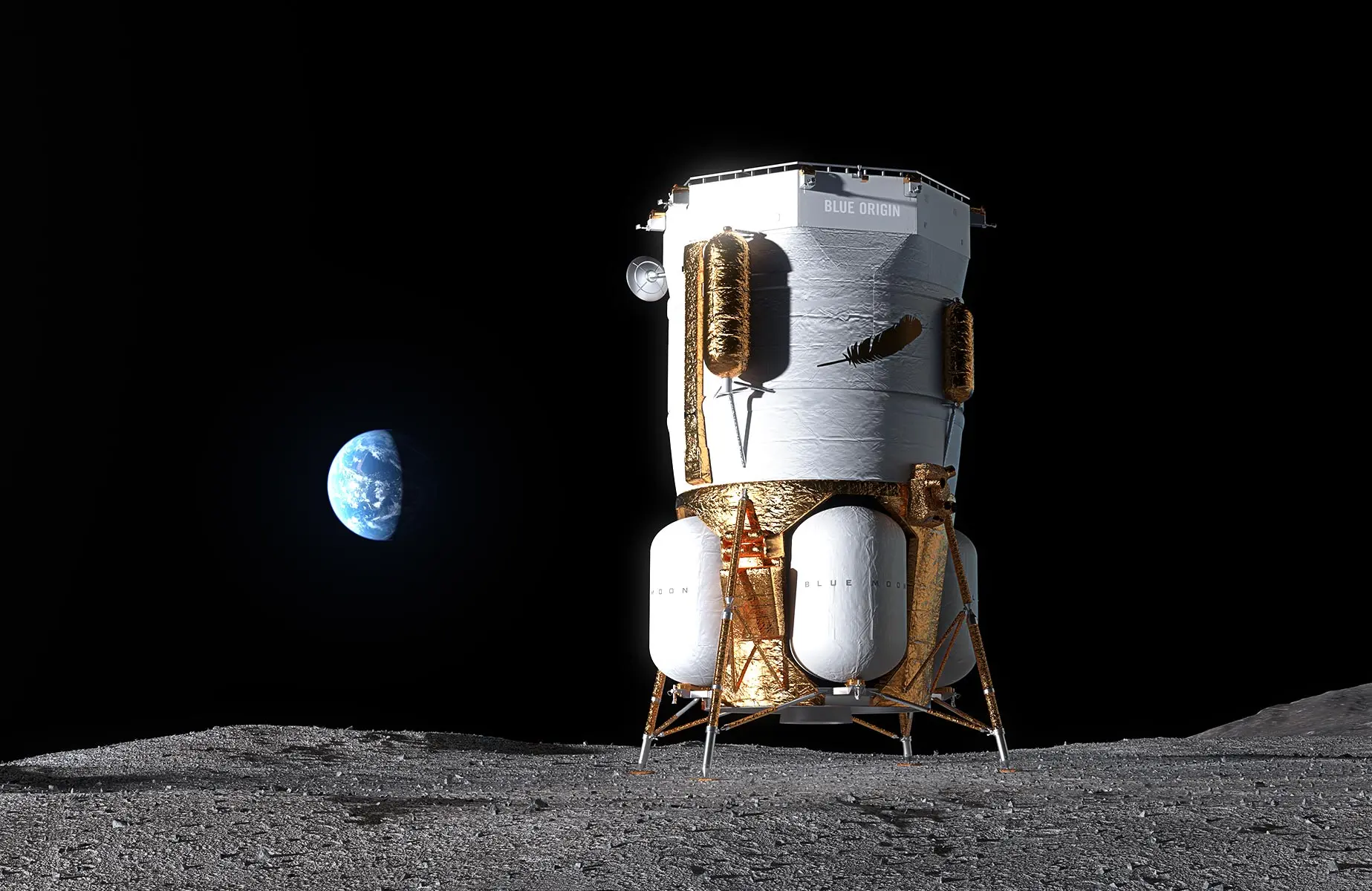
NASA is exploring alternative rockets to launch Blue Origin’s first Blue Moon lunar lander following the May 28 explosion of a New Glenn rocket that heavily damaged Launch Complex 36 at Cape Canaveral Space Force Station.

NASA Administrator Jared Isaacman outlined what he called a “whole of government response” to the incident in a FOX Business interview Thursday. “We are also de-coupling the lander from the launch vehicle and the pad itself,” Isaacman said.
The administrator made clear the agency’s priority is keeping the lunar lander program on schedule, not waiting for New Glenn to return to flight. “NASA is laser focused on the lander because we’re laser focused on our mission to return astronauts to the surface of the moon before 2028,” Isaacman said. He added that NASA intends to keep the lander progressing so it is “available for our test mission in 2027, which is Artemis 3, and potentially available to meet our landing objectives in 2028.”
Isaacman acknowledged the short list at CNBC’s CEO Summit earlier this week. “In terms of heavy lift, you know, real heavy lift, you’ve got SpaceX and Blue Origin, and obviously one of them is down a pad right now,” he said. He told CNBC that restoring LC-36 will “take some serious time,” and that a 2028 recovery is “within the realm” of possibility.
The NASA Administrator framed the explosion as the kind of failure inherent to spaceflight. “It’s a setback that happens in this business,” he said. “A rocket is a controlled explosion. We have to learn from it and be ready to move forward.”

Spaceflight Now reported yesterday that they confirmed with NASA officials that the agency wants Blue Moon Mark 1, and potentially Mark 2, moved off New Glenn. That would come with its own challenges and would require substantial updates to achieve:
Where Could Blue Moon Fly?
Falcon Heavy: Isaacman’s apparent pick, but its fairing diameter is 5.2 meters vs. New Glenn’s 7m, and SpaceX pads currently can’t fuel a hydrogen lander. Major modifications for the fairing and for pad infrastructure would be required.
Starship: Room to spare, but it’s the rival lander provider, and currently Starship is still in development. The current Starship launch infrastructure does not have LH2 capabilities.
Vulcan: Flies from SLC-41, but its 5.4m fairing is also too narrow as designed.
New Glenn: Blue Origin vows flights will resume by year’s end. A year is a more reasonable (but still optimistic) estimate, and that will depend a lot on weather and other factors out of Blue’s control.
No alternative has been selected.
Neither SpaceX nor Blue Origin has responded publicly at the time of this writing.

Author: Charles Boyer
NASA kid from Cocoa Beach, FL, born of Project Apollo parents and family. I’m a writer and photographer sharing the story of spaceflight from the Eastern Range here in Florida.



Leave a Reply