


The Orion Integrity capsule and her Artemis II crew have looped around the Moon, made its closest approach to the lunar surface and are now on their way home.

This completes the most significant leg of NASA’s Artemis II mission and sets a new record for the farthest humans have ever traveled from Earth, a record that Commander Reid Wiseman says he hopes doesn’t last very long.
Orion reached its closest approach to the Moon at about 4,067 miles above the lunar surface at 7:00 PM EDT, with the spacecraft traveling roughly 60,863 miles per hour relative to Earth.
Minutes later, the crew reached their maximum distance from Earth at 252,756 miles. This sets a new record for human spaceflight and placing the crew 4,111 miles farther from Earth than the Apollo 13 mission in 1970. That’s a long way.
The record had stood for 56 years, but it’s a new day and there are new leaders.


“Most importantly, we choose this moment: we challenge this generation — and the next — to make sure this record is not long-lived,” Wiseman said once they had broken the old record officially.
Dr. Lori Glaze, the acting associate administrator for Exploration Systems Development Mission Directorate, said, “At NASA, we dare to reach higher, explore farther, and achieve the impossible. That’s embodied perfectly by our Artemis II astronauts – Reid, Victor, Christina, and Jeremy. They are charting new frontiers for all humanity.”
Artemis II Rounds the Moon — Heading Home
Wiseman, Glover, Koch, and Hansen have completed their historic lunar flyby, set a new human spaceflight distance record, and are now on the free-return arc back toward Earth and a Friday splashdown.
| Time (EDT) | Milestone | Status |
|---|---|---|
| Monday, April 6, 2026 — Lunar Flyby Today | ||
| 1:00 PM | NASA Live Flyby Coverage Begins Broadcast on NASA+, YouTube, Amazon Prime, Apple TV, Hulu, Netflix, HBO Max, and Roku | ✓ Complete |
| 1:30 PM | Science Officer Briefs Crew on Flyby Targets Final review of 30 lunar science targets including Orientale basin; lighting conditions confirmed | ✓ Complete |
| 1:56 PM | Apollo 13 Distance Record Broken (248,655 mi) Artemis II surpasses the 56-year-old record for farthest humans have ever traveled from Earth | ✓ Complete |
| 2:45 PM | Lunar Observation Period Begins (~7 hrs) Crew works in two-person shifts photographing craters, plains, and mountains; voice observations logged | ✓ Complete |
| 6:44 PM | Communications Blackout Begins Orion passes behind the Moon; ~40-minute loss of signal with Mission Control and Deep Space Network | ✓ Complete |
| 6:45 PM | Earthset Earth glides behind the lunar horizon from Orion’s perspective — crew briefly loses sight of home | ✓ Complete |
| 7:00 PM | Lunar Closest Approach — 4,067 Miles Above Surface First humans within 4,100 miles of the Moon since Apollo 17 in 1972; speed 60,863 mph relative to Earth | ✓ Complete |
| 7:02 PM | Maximum Distance from Earth — 252,756 Miles New human spaceflight record — 4,111 miles farther than Apollo 13; free-return arc now carries crew home | ✓ Complete |
| 7:24 PM | Earthrise & Signal Reacquired Earth rises over the lunar limb; Deep Space Network restores contact with crew moments later | ✓ Complete |
| 9:20 PM | Lunar Observation Period Ends / Image Transfer Begins Crew begins downlinking flyby photography to ground; science team reviews overnight | ▶ Upcoming |
| Tuesday, April 7, 2026 — Return Lunar Coast Tomorrow | ||
| Morning | Science Team Debrief with Crew Lunar scientists review overnight imagery and discuss observations while the flyby is fresh in crew memory | — Planned |
| All Day | Return Lunar Coast — Day 1 Orion accelerating Earthward on free-return arc; no propulsive maneuvers required barring contingency | — Planned |
| All Day | Deep Space Medical Monitoring Continues Ongoing ARCHER and AVATAR health investigations; biomedical data downlinked to flight surgeons | — Planned |
| TBD | Daily Mission Status Briefing (NASA Johnson) Briefings resume Tuesday after Monday’s flyby-day exception; livestreamed on NASA YouTube | — Planned |
Status: ✓ Complete · ▶ Upcoming · — Planned | Times: EDT (UTC−4). MET = Mission Elapsed Time from liftoff Apr 1, 6:35 PM EDT. | Sources: NASA Artemis II Blog, NASA Public Affairs, Space.com. | Last updated: April 6, 2026, evening.
Quiet Time
As the Orion went behind the moon at 6:44 PM EDT, the crew entered a known communications blackout, cutting off contact with Mission Control in Houston for roughly 40 minutes.
As Orion emerged from behind the Moon, and crew witnessed an Earthrise — Earth coming back into view over the lunar horizon, moments before the Deep Space Network reacquired the spacecraft’s signal and restored communications at 7:24 PM EDT.
The lunar flyby was not just a navigational milestone. NASA had 10 science objectives and 35 different targets for the crew to observe during the flyby, working in two-person shifts over roughly five hours of the main observation period.
The Lunar Observations Went Well
A lively stream of science observations from the crew throughout the flyby was received with grins and chatter in the Science Evaluation Room, where lunar scientists reported the crew noted color nuances expected to enhance scientific understanding of the lunar surface. This was a well-drilled team executing flawlessly, and having fun while they did so.
High-resolution photos have not yet been downloaded from Integrity, but NASA is expecting that they will begin receiving that data soon and continue downloading overnight. Look for photos sometime tomorrow,
One of those science targets included the Orientale basin, a nearly 600-mile-wide crater that straddles the Moon’s near and far sides that no human has ever seen. Apollo astronauts missed Orientale because the mission timing for Apollo lunar landings required it to be total darkness. Conditions were different today, and now four human beings have seen it firsthand.

When you think about it, that’s quite a thing: think about how many human beings have looked up at our nearest celestial neighbor, and Glover, Hansen, Koch and Wiseman have seen that part of it.
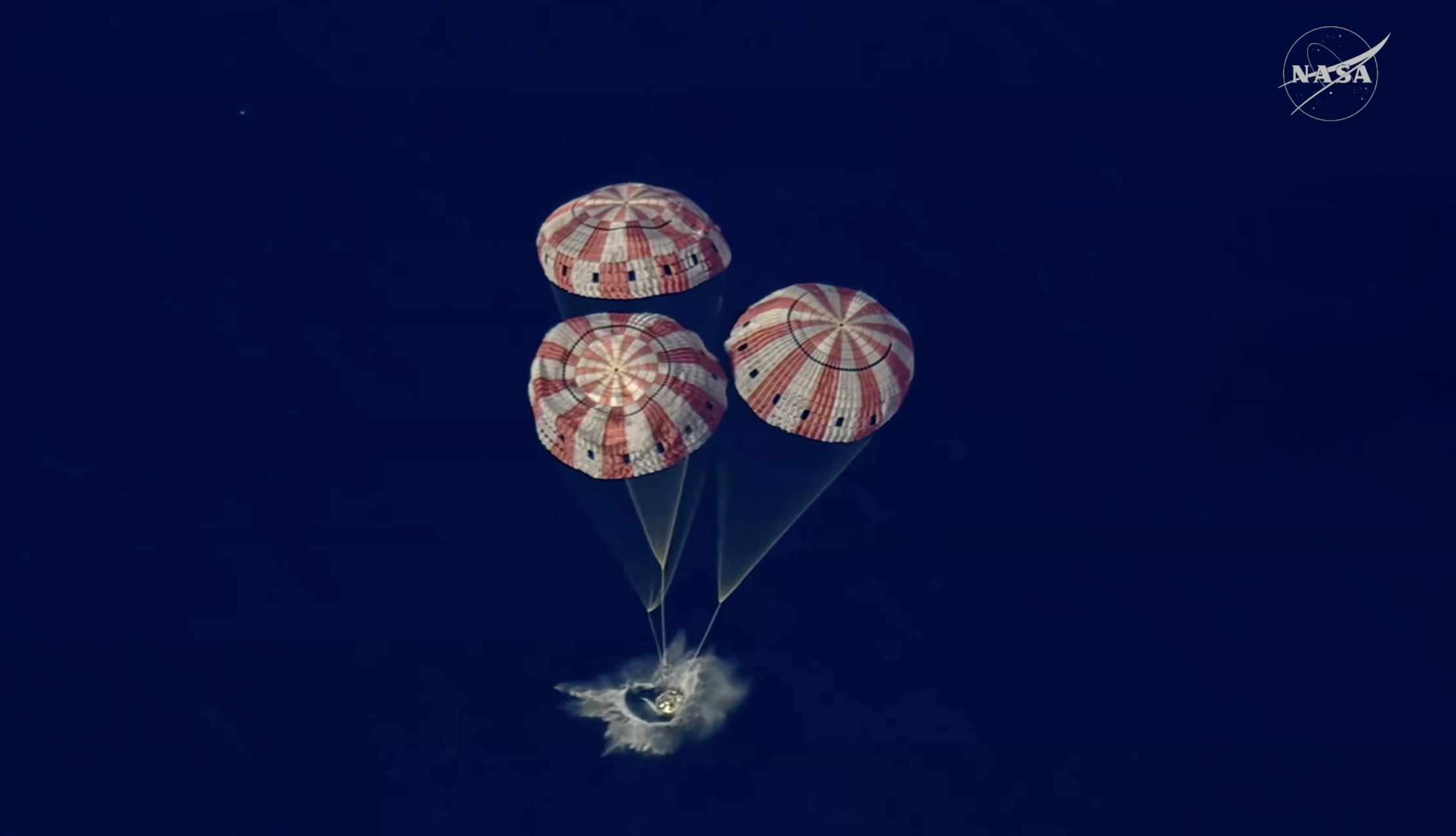
The crew is now on the free-return arc that will bring them back to Earth. Splashdown is planned in the Pacific Ocean off the coast of San Diego. Re-entry and splashdown is four days from now, on Friday, April 10.

Author: Charles Boyer
NASA kid from Cocoa Beach, FL, born of Project Apollo parents and family. I’m a writer and photographer sharing the story of spaceflight from the Eastern Range here in Florida.




Leave a Reply