

Good news, Space Coast: the meteorologists at Colorado State University say the 2026 Atlantic hurricane season should be relatively quiet. With an El Niño developing in the Pacific, conditions for storm formation are forecast to be less favorable, leading to fewer storms.

The bad news is that they’ve been wrong before. They know it, and they want you to know they know it too. They are confident, but not really sure.
First, A Word About Forecasts and Odds
Weather forecasting is not an absolute science. There are just too many variables at play. Forecasting’s currency is probability: a 90% chance of rain leaves a 10% chance it won’t rain at all in the forecast area.
Most people assume when they hear that 90% that it will rain. Probably, but there’s also a chance it won’t. This is how forecasting works. But that one in ten times that it doesn’t rain, people call the weatherman a fool who doesn’t know his rear end from a hole in the ground. Fact is, he was right according to the rules of probability. People just didn’t pay close enough attention.
Colorado State Issues First Storm Season Forecast
CSU’s Tropical Cyclones, Radar, Atmospheric Modeling, and Software Team is forecasting 13 named storms, six hurricanes, and two major hurricanes for the season running June 1 through November 30.


That’s below the long-term averages of 14, seven, and three, respectively. The primary reason for the optimism is an El Niño pattern expected to mature by peak season in August through October, which tends to crank up wind shear over the Atlantic and make life miserable for developing storms. Think of it as the atmosphere doing Florida a favor for once.
The team pegs 2026 activity at roughly 75% of a normal season. For comparison, 2025 came in at 105% of average, a figure underscored by Hurricane Melissa, which slammed Jamaica as a Category 5 and left nearly $9 billion in damage and 95 fatalities across the Caribbean. Yes, “below average” sounds good right now.
But Wait, There’s More…
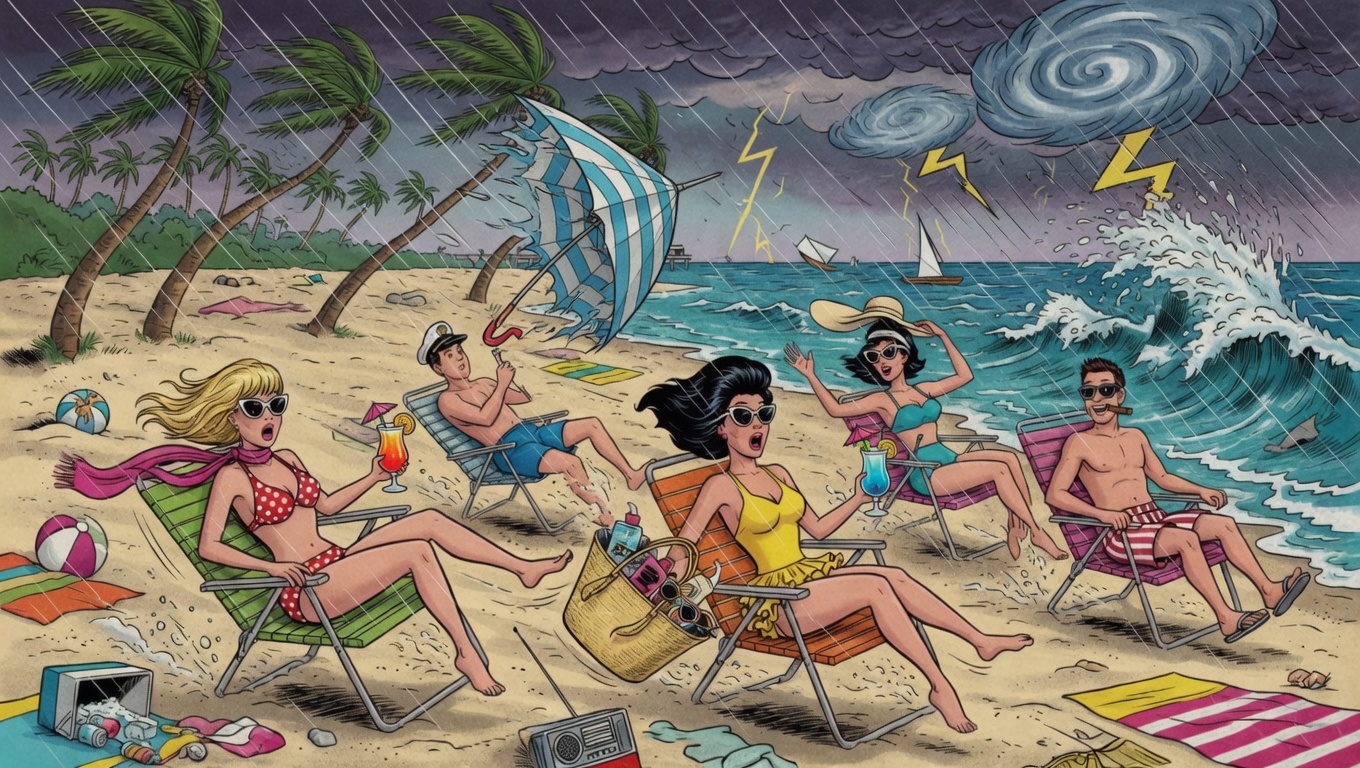
There’s a catch, naturally. The Atlantic’s sea surface temperatures are sending mixed signals — warmer than normal in the western Atlantic (bad), cooler than normal in the east (good) — and the El Niño transition from current La Niña conditions is still unfolding. Lead author Phil Klotzbach compared 2026 to analog seasons from 2006, 2009, 2015, and 2023, which ranged from well below average to somewhat above average. In other words: somewhere between “pleasant” and “please evacuate.”
“Our analog seasons ranged from well below-average Atlantic hurricane activity to somewhat above average,” Klotzbach said, in what may be the most honest forecast caveat ever published. Keep in mind that weather forecasting is not an absolute science, and its currency is probability: a 90% chance of rain leaves a 10% chance it won’t rain at all in the forecast area. Most people assume when they hear that 90% that it will rain. Probably, but there’s also a chance it won’t. This is how forecasting works.

Never Tell Me The Odds
The landfall probabilities are also below historical averages: a 32% chance of a major hurricane hitting somewhere along the U.S. coastline, versus the historical norm of 43%. The Gulf Coast from the Florida Panhandle to Brownsville comes in at 20%, against a 27% average.
Just remember how probabilities work: everything’s a maybe.
Stash Some Stuff Just In Case
For Space Coast residents, the standard preparation rules apply regardless of what any forecast says. Get your hurricane kit ready.
Or get a kit started if you don’t have one. All it takes to get going is putting stuff in a cardboard box and keeping in the closet. Most of it can be ordered from Amazon or Walmart, so there’s no good excuse not to do it. Even just one night without power will make you wish you had a box of flashlights and fresh batteries if you don’t have some set aside in your hurricane kit.
The forecast will be updated June 10, July 8, and finally, on August 5. Think of it as recalibration: we’ll all have a much clearer picture of what summer has in store, including the forecasters.
This is CSU’s 43rd annual Atlantic hurricane forecast, a tradition started by the late Professor Bill Gray in 1984. The full report is available at Colorado State University.


Author: Charles Boyer
NASA kid from Cocoa Beach, FL, born of Project Apollo parents and family. I’m a writer and photographer sharing the story of spaceflight from the Eastern Range here in Florida.



Leave a Reply