


Now five days into its historic journey, Artemis II is closing in on the Moon and preparing for Monday’s long-awaited lunar flyby. That will be the first time humans have traveled to the far side of the Moon since Apollo 17 in 1972.
The crew began Flight Day 5 Sunday morning with the mission’s first major test objective: a full evaluation of the Orion Crew Survival System suit. The crew suited up, pressurized their suits, and strapped in to assess performance and mobility in microgravity, a critical checkout ahead of re-entry later this week.
Orion has now entered the lunar sphere of influence, or the point roughly 65,000 miles from the Moon where lunar gravity overtakes Earth’s pull on the spacecraft. A trajectory correction burn is also planned for the afternoon to fine-tune the free-return path ahead of Monday’s flyby. Mission managers and NASA science experts will brief reporters at 5:30 PM EDT on NASA’s YouTube channel.
Orion Closing In on the Moon
About 65,000 miles from the Moon Sunday morning, Orion’s crew of four is preparing for tomorrow’s historic lunar flyby — the closest humans have come to the Moon since Apollo 17.
| Time (EDT) | Milestone | Status |
|---|---|---|
| Sunday, April 5, 2026 Today | ||
| Morning | Orion Crew Survival System Suit Evaluation Crew suited up, pressurized, and strapped in; assesses suit mobility and thermal performance in microgravity | ✓ Complete |
| Afternoon | Outbound Trajectory Correction Burn Small ESM engine burn fine-tunes free-return arc for precise lunar closest-approach corridor | ▶ Upcoming |
| Afternoon | Final Lunar Science Targets Received Mission scientists uplink confirmed observation priorities; Orientale basin far-side targets included | ▶ Upcoming |
| Afternoon | Enter Moon’s Gravitational Sphere of Influence Lunar gravity becomes the dominant force on Orion’s trajectory | ▶ Upcoming |
| 5:30 PM | NASA Daily Mission Briefing (YouTube) Mission managers and lunar scientists preview tomorrow’s flyby objectives | ▶ Upcoming |
| Monday, April 6, 2026 — Lunar Flyby Tomorrow | ||
| MET ~5d 1h 23m | Lunar Closest Approach (~4,000 mi) Orion passes within ~4,000 miles of the surface on free-return arc; first humans near the Moon since 1972 | — Planned |
| MET ~5d 1h 26m | Maximum Distance from Earth (~252,000 mi) Farther from Earth than any human in history; free-return arc begins carrying crew home | — Planned |
| Record (~1:56 PM) | Surpass Apollo 13 Distance Record (248,655 mi) Orion exceeds the farthest distance from Earth ever traveled by humans | — Planned |
| Multi-hour | Far Side Photography & Crew Observations Crew photographs Orientale basin and far-side regions never seen directly by human eyes | — Planned |
Status: ✓ Complete · ▶ Upcoming · — Planned | Times: EDT (UTC−4). MET = Mission Elapsed Time from liftoff Apr 1, 6:35 PM EDT. | Sources: NASA Artemis II Blog, NASA Public Affairs. | Last updated: April 5, 2026.
Monday’s Flyby: Six Hours at the Moon
The main event for the mission comes tomorrow, Monday, April 6th. Artemis II will loop around the moon and start its return to Earth.
A six-hour lunar observation window opens at 2:45 PM EDT, when Orion’s main cabin windows will be angled toward the Moon and the crew will be close enough for detailed scientific observations. Closest approach — approximately 4,066 miles from the lunar surface — is expected around 7:02 PM EDT. From that distance, the Moon will appear roughly the size of a basketball held at arm’s length.

Earlier in the day, at 1:56 PM EDT, the crew is expected to break the all-time human spaceflight distance record set by the crew of Apollo 13 in 1970. Orion will reach a maximum of 252,757 miles from Earth — about 4,100 miles beyond the mark Apollo 13 set during its emergency free-return trajectory. The crew is expected to mark the milestone with remarks around 2:10 PM.

The science targets for the flyby have been finalized and uplinked to the crew Sunday afternoon. NASA’s lunar science team has assigned each astronaut specific surface features to observe and photograph, with a focus on regions difficult or impossible to study from Earth-based observatories.

2010 photomosaic of Mare Orientale created by Lunar Reconnaissance Orbiter. Photo: NASA
That list includes portions of the Orientale basin, a massive, multi-ring impact crater straddling the Moon’s western limb that has never been seen directly by human eyes. The crew caught their first partial glimpses of it during Flight Day 4 and described the view as striking. “That is the dark side. That is something we have never seen before,” Koch told NBC News from orbit.
Forty Minutes of Silence
As Orion swings behind the Moon at approximately 5:47 PM EDT Monday, Mission Control in Houston will lose contact with the crew for roughly 40 minutes. The Moon itself blocks all radio signals between the Deep Space Network and the spacecraft during this period — the same type of planned blackout experienced during Artemis I and the Apollo missions. Flight Director Judd Frieling noted the crew will not be in any danger during the gap. “Physics takes over,” he said, “and physics will absolutely get us back.”
During the blackout, the crew will also witness a solar eclipse unlike any seen from Earth — the Moon blocking the Sun from Orion’s vantage point, exposing the solar corona for nearly an hour as the spacecraft arcs around the far side.

When Orion re-emerges from behind the Moon, the Deep Space Network is expected to quickly reacquire the signal and restore contact with Mission Control. The flyby observation window closes at 9:40 PM EDT.
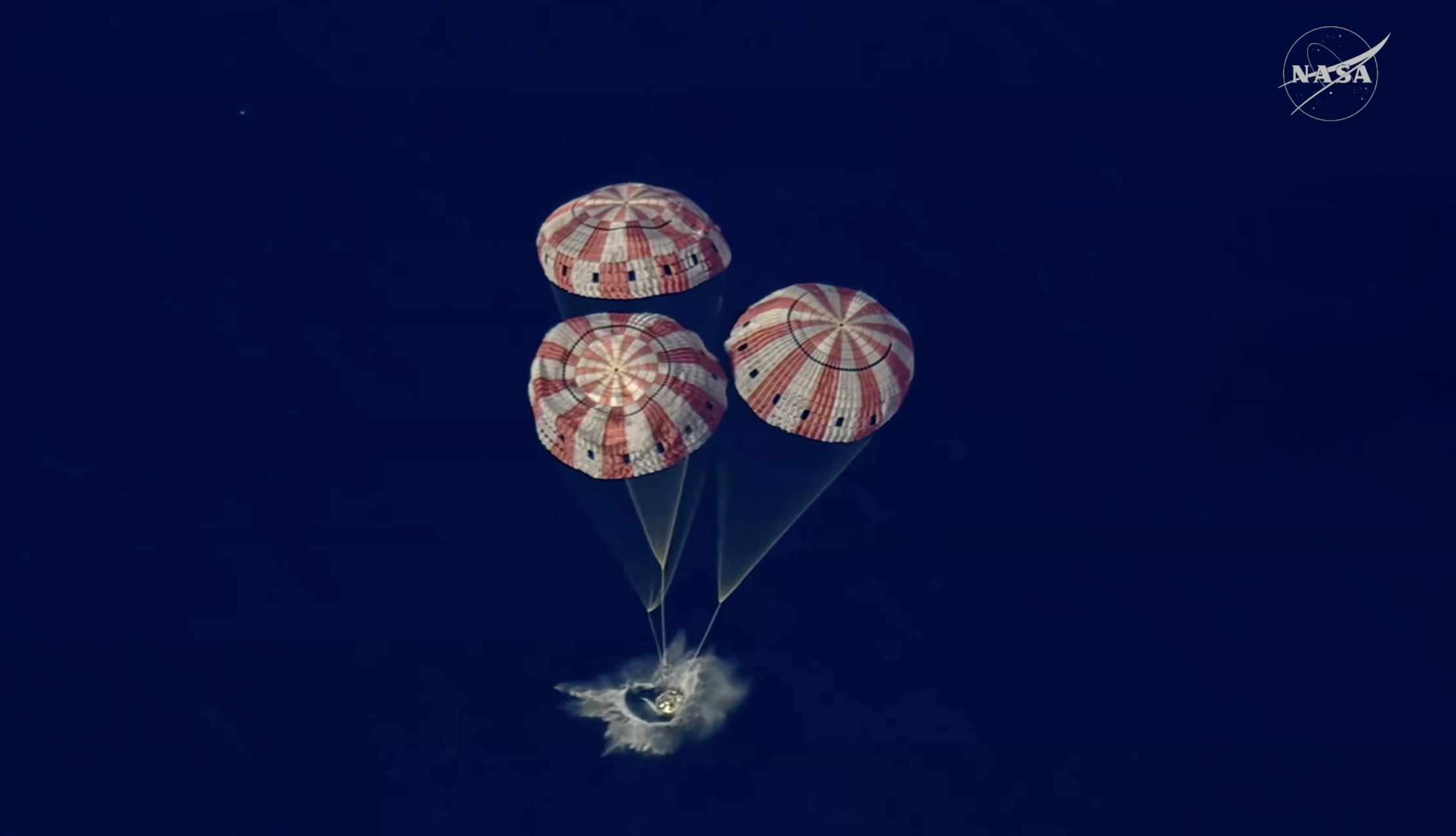
Following Monday’s milestone, the crew will begin a four-day return coast to Earth, with splashdown in the Pacific Ocean off the coast of San Diego targeted for Friday, April 10.

Author: Charles Boyer
NASA kid from Cocoa Beach, FL, born of Project Apollo parents and family. I’m a writer and photographer sharing the story of spaceflight from the Eastern Range here in Florida.




Leave a Reply