

SpaceX and the U.S. Space Force are gearing up to launch the eighth mission of the X‑37B Orbital Test Vehicle—designated USSF‑36 (OTV‑8)—this evening aboard a Falcon 9 rocket. Liftoff is scheduled for 11:50 pm ET, launching from Launch Complex 39A at Kennedy Space Center in Florida. If weather or technical reasons delay the launch prior to propellant loading, the launch window extends to 03:40 am ET tomorrow morning.
Booster B1092 will be embarking on its sixth flight tonight.
Sonic Boom
This launch is a Return To Launch Site mission, meaning the booster is set to land at Landing Zone 2 at Cape Canaveral. As such, there will be a sonic boom spreading across the Space Coast region as the rocket returns.
Details in Brief
| Field | Details |
|---|---|
| Organization | SpaceX |
| Location | Kennedy Space Center, FL, USA |
| Rocket | Falcon 9 |
| Pad | Launch Complex 39A |
| Status | Go for Launch |
| Status Info | Current T-0 confirmed by official or reliable sources. |
| Window Opens | Thursday, 08/21/2025 11:40 PM |
| Window Closes | Friday, 08/22/2025 3:40 AM |
| Destination | Low Earth Orbit |
| Mission Description |
Eighth flight of the X-37B program. The X-37B is a dynamic and responsive spacecraft responsible for conducting a range of tests and experiments that expedite the development of critical next-generation technologies and operational concepts for reusable space capabilities.
The OTV-8 mission in Low Earth Orbit includes operational demonstrations and experiments of next-generation technologies, including laser communications and the highest performing strategic grade quantum inertial sensor ever tested in space. Mission partners include the Air Force Research Lab and the Defense Innovation Unit, respectively. |
As of 10:00 AM Thursday August 21, 2025. Launch times are subject to change or cancellation at any time. Consult SpaceX.com for more information.
Weather
The 45th Weather Squadron of the US Space Force Launch Delta 45 has forecast a 65-80% probability of acceptable weather conditions through the launch window.


Trajectory
Northeast.

The booster is slated to return to Landing Zone 2 at Cape Canaveral Space Force Station, a few miles south of LC-39A.

Payload
The X-37B Orbital Test Vehicle (OTV) is a reusable, uncrewed spaceplane developed by Boeing for the United States Space Force. Roughly the size of a small bus, it resembles a miniature space shuttle orbiter and operates in low Earth orbit for extended missions—some lasting over 900 days.
Originally a NASA project before transferring to the Department of Defense, the X‑37B is designed to test new technologies in orbit and return them safely to Earth, thanks to its runway landing capability. It launches vertically on rockets like Falcon 9 and glides back to Earth for landing at sites such as Kennedy Space Center or Vandenberg Space Force Base.

While many details about the X‑37B’s missions remain classified, the vehicle is widely understood to be a testbed for advanced military tech. Past missions have reportedly involved experiments in satellite servicing, secure communications, surveillance tech, and space environment durability tests. In recent flights, it’s tested solar power beaming and high-endurance components as well as unique orbital maneuvers demonstrating the Space Force’s ability to place spacecraft in any orbital location quickly.
Spaceflight Now will have coverage of the launch starting about one hour before liftoff on Youtube: link
For official updates regarding launch times, SpaceX.com is the best source of information. Starlink launch times change from time to time, and the company generally updates their website within minutes of the decision to change the launch time. This is very handy if none of the streaming options on YouTube have started their broadcasts.
Remember that there is a delay between a launch stream and the actual countdown clock. That is simply because of physics: it takes time for the signal to travel from the launch site, through the Internet, and back down to your phone, resulting in a five to fifteen-second delay.
Next Space Flight an app for iOS and Android phones, has a real-time countdown clock that is accurate to a second, give or take. The app is free. Search the App Store or Google Play. They are also on the web: nextspaceflight.com.
Launch Viewing: In Person
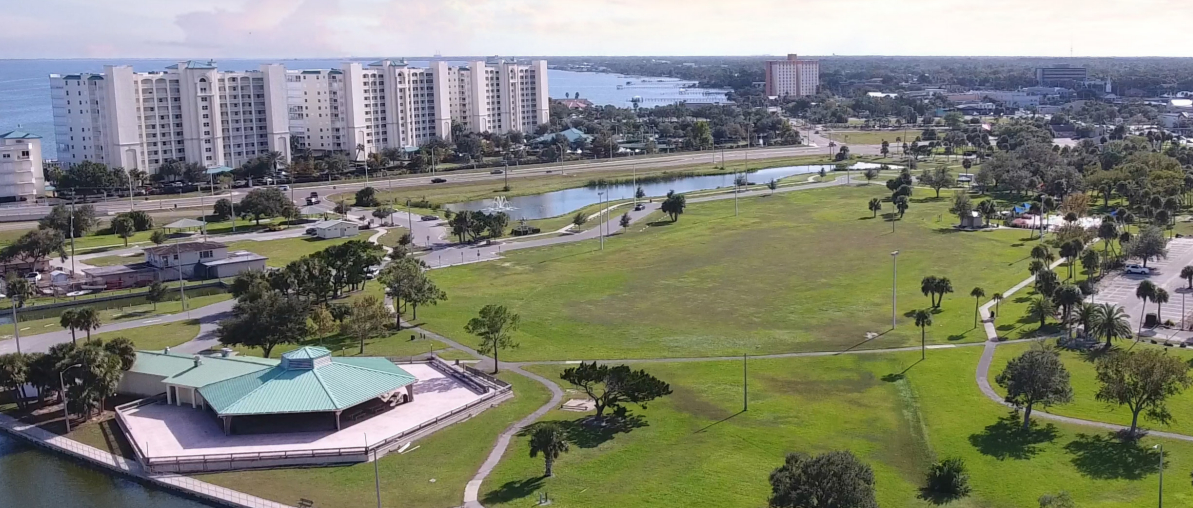
The best free options are available for spectators: the Max Brewer Bridge, Space View Park and Rotary Riverfront Park, all in Titusville.

Author: Charles Boyer
NASA kid from Cocoa Beach, FL, born of Project Apollo parents and family. I’m a writer and photographer sharing the story of spaceflight from the Eastern Range here in Florida.


Leave a Reply