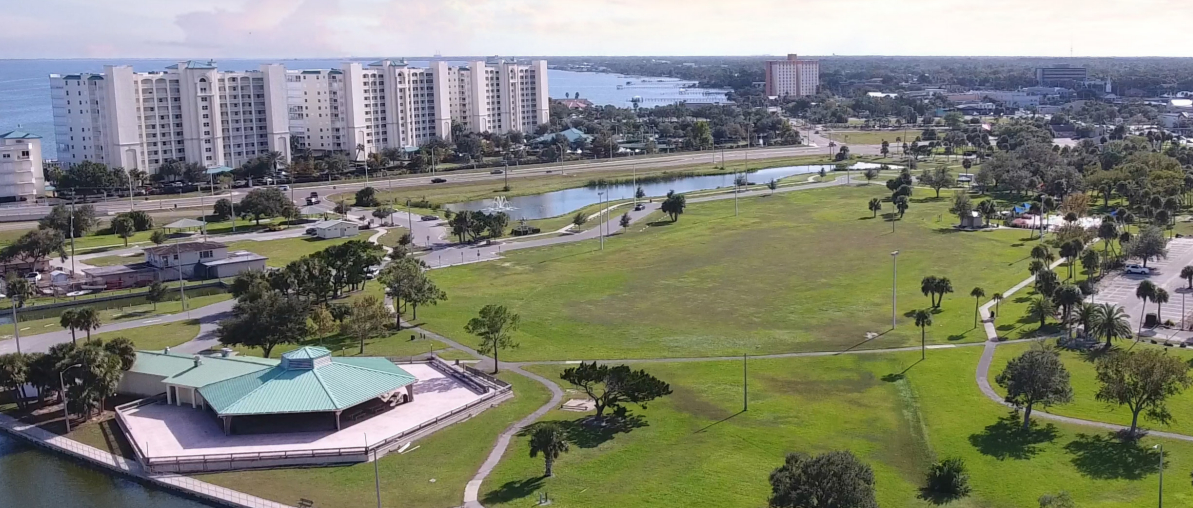

Several habitat restoration projects are underway in and around Titusville, aiming to restore wetlands, shorelines, and seagrasses as part of a larger effort funded by a $9.4 million NOAA Transformational Habitat Restoration grant.

These initiatives, led by various organizations, will improve water quality, enhance biodiversity, and strengthen coastal resilience along the Indian River Lagoon.

Scobie Park Restoration Project (Titusville)
Project Lead: Brevard Zoo
Habitat Type: Living Shoreline (LS)
Located along the Indian River Lagoon in Downtown Titusville, the Scobie Park restoration project is focused on stabilizing 130 linear feet of eroding shoreline. This area serves as a critical habitat for horseshoe crab mating and other marine species.
Project Details:
- Wave Break Installation: Seven 27-foot-long coquina rock modules (totaling 189 linear feet) will be placed to reduce erosion and protect the shoreline.
- Native Plantings: 35 robust 7-gallon pots of red mangroves (Rhizophora mangle), fifty 1-gallon pots of Spartina alterniflora, and ninety-five 3-gallon pots of Spartina bakeri will be planted to reinforce the shoreline and support local wildlife.
- Community Involvement: Approximately 50 volunteers and the City of Titusville are contributing to the effort.
This project will enhance water quality, reduce erosion, and improve the resilience of the shoreline, ensuring long-term habitat benefits.

Scottsmoor Wetland Impoundment Restoration
Project Lead: Bethune-Cookman University
Habitat Type: Seagrasses (SG)
This project aims to restore seagrass populations and create a sustainable source for future restoration efforts.
Project Details:
- Seagrass Restoration: 0.25 acres of widgeon grass (Ruppia maritima) will be planted using nursery-grown plants and laboratory-scarified seeds.
- Seagrass Nursery Development: A ~2-acre impoundment will be transformed into a seagrass nursery, serving as a source for future restoration.
- Research & Education: A written protocol will be developed for utilizing mosquito impoundments as seagrass nurseries.
- Community Involvement: The project will engage students from Bethune-Cookman University, a Historically Black College and University (HBCU), to increase awareness and participation in coastal restoration efforts.
Moore Creek Wetland Restoration (Merritt Island, near Banana Creek)
Project Lead: St. Johns River Water Management District
Habitat Types: Wetlands Restoration (WR) & Fish Passage (FP)

Located within the Kennedy Space Center/Merritt Island National Wildlife Refuge/Canaveral National Seashore complex, this project is restoring approximately 2,000 acres of wetlands in the C-20-A and adjacent Moore Creek Impoundments.

Project Details:
- Hydrological Restoration: Re-establishing unrestricted connections between Banana Creek, the Indian River Lagoon, and Moore Creek.
- Creek Bottom Restoration: Restoring over 500 acres of creek bottom to improve fish habitat.
- Dike Removal: Degrading 46,123 feet (~8.74 miles) of dike, allowing for natural water flow.
- Wetland Elevation Restoration: Converting approximately 53 acres of dike and ditch back to wetland elevation.
This effort will enhance wetland connections to the Indian River Lagoon, improve wetland functions, and provide open fish passage to essential habitats.
A Collective Effort for Environmental Sustainability
These projects represent a significant investment in the health of the Indian River Lagoon and surrounding ecosystems. Through partnerships with local organizations, volunteers, and research institutions, these restoration efforts will provide long-term benefits for water quality, wildlife, and community engagement.




Leave a Reply