
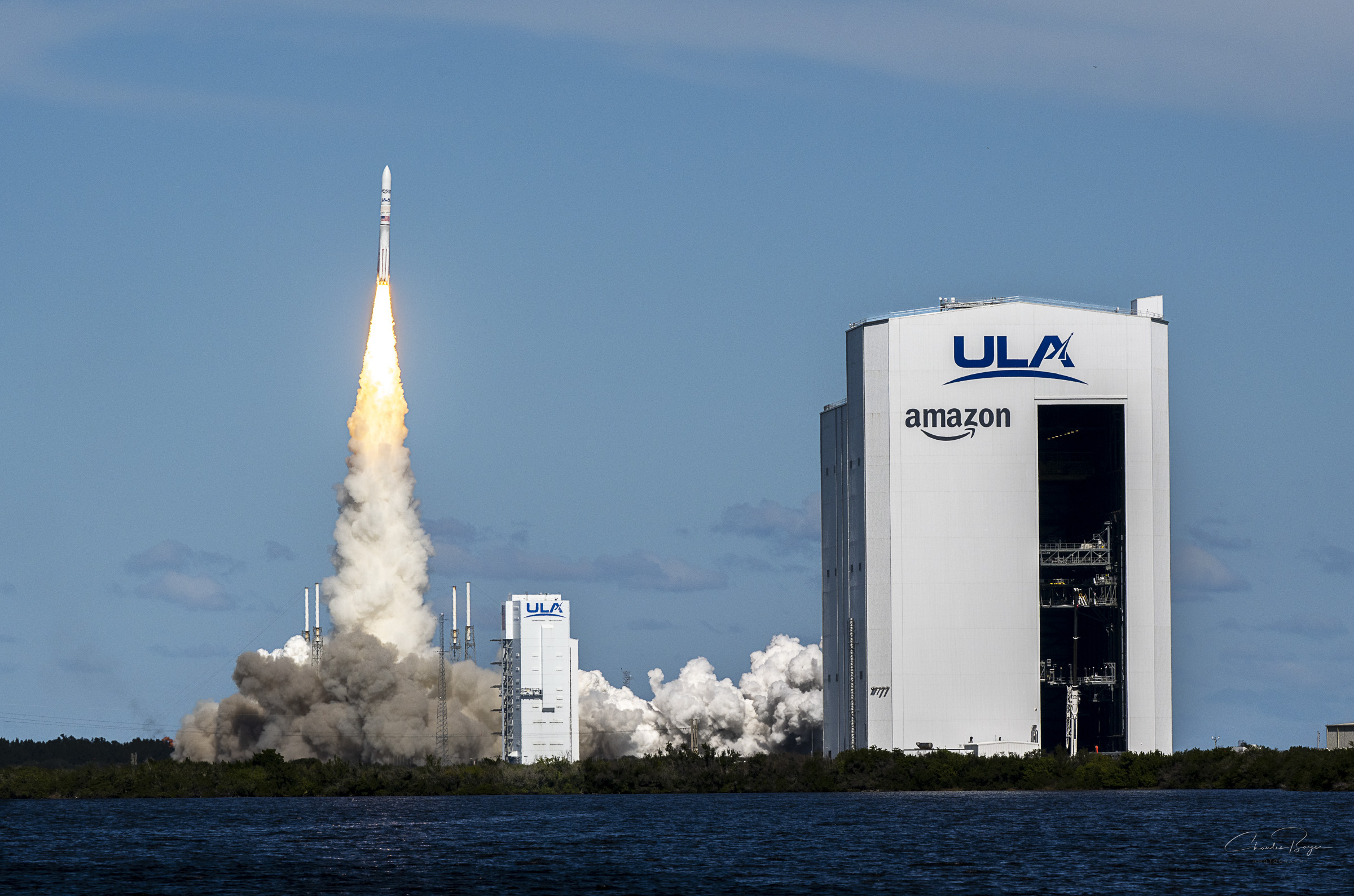
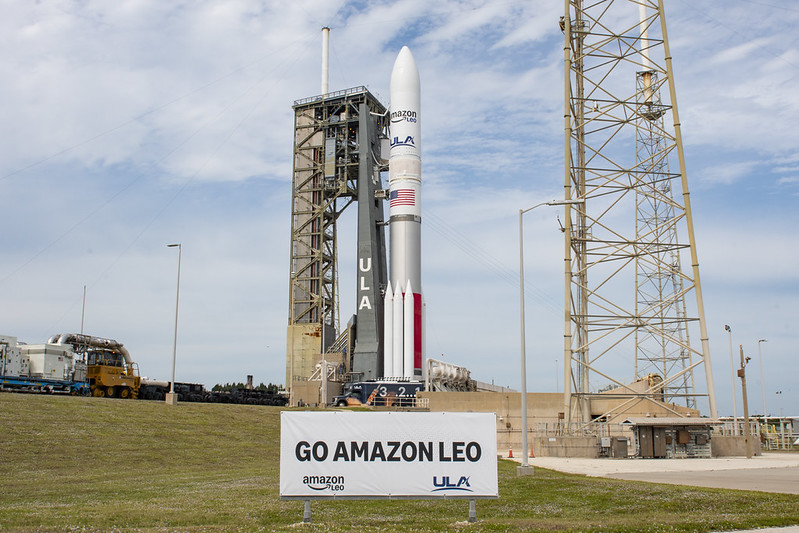
United Launch Alliance launched a Vulcan VC6L carrying thirty Amazon Leo satellites early Sunday afternoon from Space Launch Complex 41 at Cape Canaveral Space Force Station in Florida. Launch time was about half an hour later than the 12:11 p.m. EST target with liftoff happening at 12:40:30 pm.
Vulcan appeared to fly straight and true. At T+ 01:45, all six SRBs burned out and were jettisoned without apparent incident. No times were given, but the two Blue Origin BE-4s powering Vulcan’s core stage seemed to burn longer than ULA’s pre-launch timeline called for, and separation from Centaur came later than expected. T+plus 6 minutes.
ULA stated that staging, ignition of the Centaur V upper stage and payload fairing jettison was confirmed, and around T+10 minutes an anomaly occurred, ending the mission in failure, which ULA announced around fifty minutes after liftoff.

It is the first outright mission failure for ULA since Boeing and Lockheed Martin formed the company in 2006. ULA has not said what went wrong, but has promised to keep its customers in the loop throughout the investigation.
How long Vulcan stays grounded matters beyond Amazon. The rocket is also under contract for national security missions that were already on hold because of the SRB problem are delayed further. Whether the Space Force moves those missions to other launch platforms is not known.
Official Statement From United Launch Alliance

Vulcan Troubles
While today was United Launch Alliance’s first launch failure in its history, Vulcan has launched five times and has had major issues on three of the flights.
| No. | Launch date (Eastern) | Config | Mission | Result | Notes |
|---|---|---|---|---|---|
| 1 | Jan. 8, 2024 2:18 a.m. EST |
VC2S | Cert-1: Peregrine lunar lander | Success | Maiden flight. Peregrine later failed to reach the moon because of a fuel leak unrelated to the rocket. |
| 2 | Oct. 4, 2024 7:25 a.m. EDT |
VC2S | Cert-2: mass simulator | Success, SRB anomaly | One solid rocket booster lost its nozzle about 37 seconds after liftoff. The rocket compensated and reached its planned orbit. |
| 3 | Aug. 12, 2025 8:56 p.m. EDT |
VC4S | USSF-106 including NTS-3 | Success | First national security launch for Vulcan and first flight with four boosters. |
| 4 | Feb. 12, 2026 4:22 a.m. EST |
VC4S | USSF-87 including GSSAP 7 and 8 | Success, SRB anomaly | A second booster malfunction. The core stage compensated and the payload reached orbit. The Space Force then paused its Vulcan launches. |
| 5 | Nov. 15, 2026 12:40 p.m. EST |
VC6L | Amazon Leo LV-01: 40 satellites | Failure | ULA said the rocket suffered an anomaly 10 minutes into flight and did not deliver the payload to orbit. First flight with six boosters and the shorter Centaur V. |
What It Means For Amazon
The flight was the first of 38 Vulcan launches Amazon has bought for Leo, its planned competitor to SpaceX’s Starlink. ULA previously flew eight Leo missions on Atlas V rockets, all successful. Amazon had launched 396 Leo satellites on 14 missions before Sunday. The first-generation network calls for more than 3,200.
In a statement, Amazon called ULA “a trusted partner” and said it expects the company to learn from the failure. Amazon had said a second Vulcan mission could follow within weeks. That schedule now depends on the investigation.
Amazon also holds launch contracts with Arianespace, Blue Origin and SpaceX. An Ariane 6 flight carrying Leo satellites is scheduled for eight days from today on November 23rd. Blue Origin’s New Glenn remains grounded after a pad explosion in May with plans to return to flight in January 2027. That timeline may now be at risk, unless the BE-4 engines are cleared quickly. All things considered, Amazon’s timeline may be at risk as well.

What’s Next?
ULA will preserve the data and begin analyzing it for indications of what caused the issue(s) that led to the mission’s failure. The company has said it will keep its customers and partners updated during the investigation and presumably, will announce the broad results of the root cause analysis in due time. How long that will be is not known at this time.
NASA Administrator Jared Isaacman quickly made an offer to assist before the end of the day:
One thing is certain: suppositions and leaps to conclusions on social media are neither particularly knowledgeable nor helpful. Let the investigators do their jobs and let the evidence and the data point to a likely cause.


Leave a Reply