


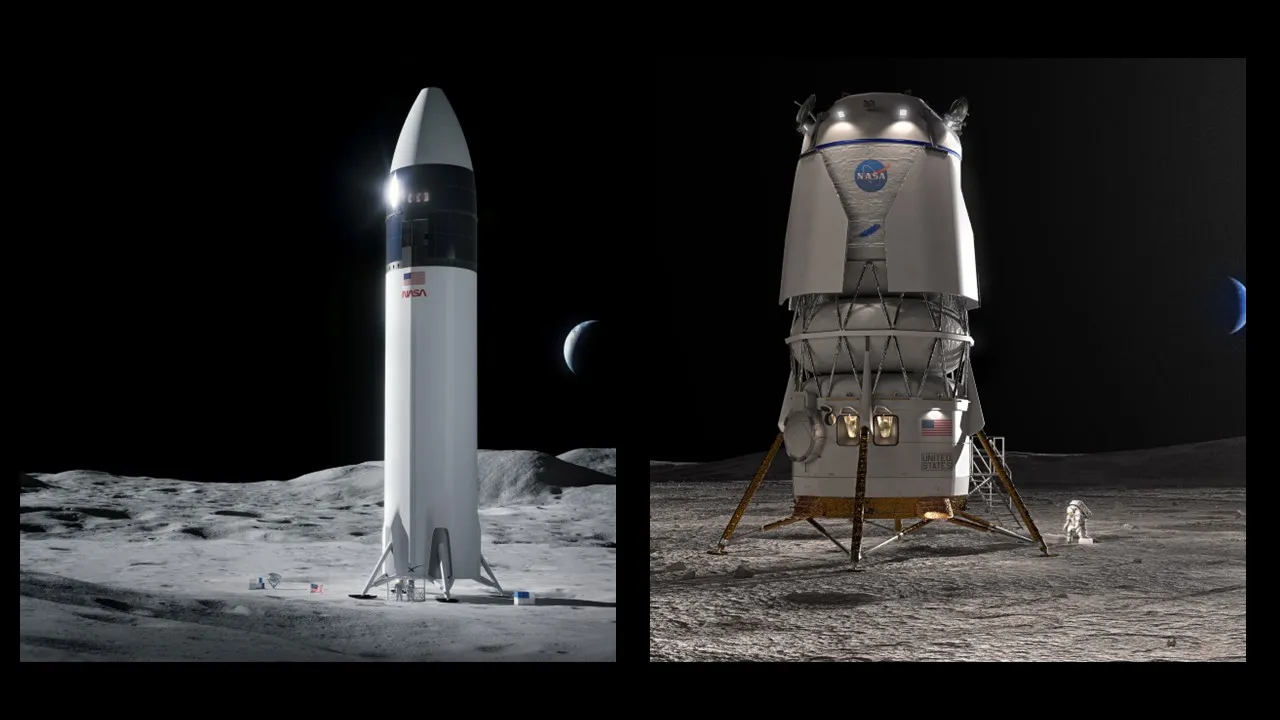
A new audit of NASA’s Human Landing System contracts confirms what many have suspected — the road to the Moon’s South Pole is longer and bumpier than planned.
The NASA Office of Inspector General released its audit of the Human Landing System program Monday, and the findings are a mixed bag for the Artemis campaign. Contracts are largely on budget. Schedules are not.
The Good: Costs Are Holding
NASA and Congress have dedicated $6.9 billion for HLS development and projects $18.3 billion through 2030. Despite that scale, SpaceX’s contract has grown only 6 percent from its original $4.3 billion potential value, and Blue Origin’s $3.1 billion deal has increased less than 1 percent. NASA’s strategy of trading schedule flexibility for additional test requirements — rather than simply paying for delays — has kept contractor costs in check.
You can read the report here:
The Bad: Starship Isn’t Going to Make June 2027
That’s the headline. SpaceX’s Artemis III Starship lander has slipped at least two years since contract award, and the OIG is blunt: the vehicle won’t be ready to land astronauts on the Moon by June 2027.

The critical near-term milestone is a vehicle-to-vehicle cryogenic propellant transfer demonstration — an unprecedented in-space operation that was itself delayed a full year to March 2026. It uses a brand-new third version of Starship, the same lineage that lost three consecutive vehicles on Flights 7, 8, and 9. Critical Design Review has been pushed to August 2026, leaving roughly four months before an uncrewed demo mission and barely six months after that before the original crew landing date. There’s no margin if anything goes wrong.
In fall 2025, SpaceX acknowledged it couldn’t make June 2027. NASA responded by asking both SpaceX and Blue Origin for acceleration proposals targeting a 2028 lunar landing. A decision is expected in spring 2026.
Blue Origin’s Status
Blue Origin’s Blue Moon lander for Artemis V is also running behind, with CDR likely slipping to July 2026 and the mission itself now targeted no earlier than March 2030. Nearly half of PDR action items remained open as of August 2025.
Eye Opening: Crew Safety Gaps
This is the section that deserves the most attention. It will not get that, but the OIG found that neither lander’s uncrewed demonstration will be fully representative of the crewed vehicle configuration — no life support systems, no crew airlock, and in Starship’s case, no elevator. The elevator that will carry astronauts 115 feet down to the lunar surface will have never been tested in the actual lunar environment before crew uses it.
There’s also an unresolved standoff between NASA and SpaceX over manual landing control. NASA’s human-rating requirements demand crew be able to take over from automated systems during descent. SpaceX’s current approach doesn’t fully satisfy that requirement, and the OIG warns the situation is trending in the wrong direction heading into CDR. A waiver similar to one previously granted for Dragon’s Commercial Crew flights can’t be ruled out. Blue Origin hasn’t even made its manual control design decisions yet. Whether NASA stays firm on this requirement remains to be seen.
Most starkly: if the lander is disabled on the lunar surface or fails to dock with Orion or Gateway, NASA has no capability to rescue the crew. The agency evaluated the option and found the cost prohibitive. No rescue plan exists for the early Artemis missions.

Author: Charles Boyer
NASA kid from Cocoa Beach, FL, born of Project Apollo parents and family. I’m a writer and photographer sharing the story of spaceflight from the Eastern Range here in Florida.


Leave a Reply