

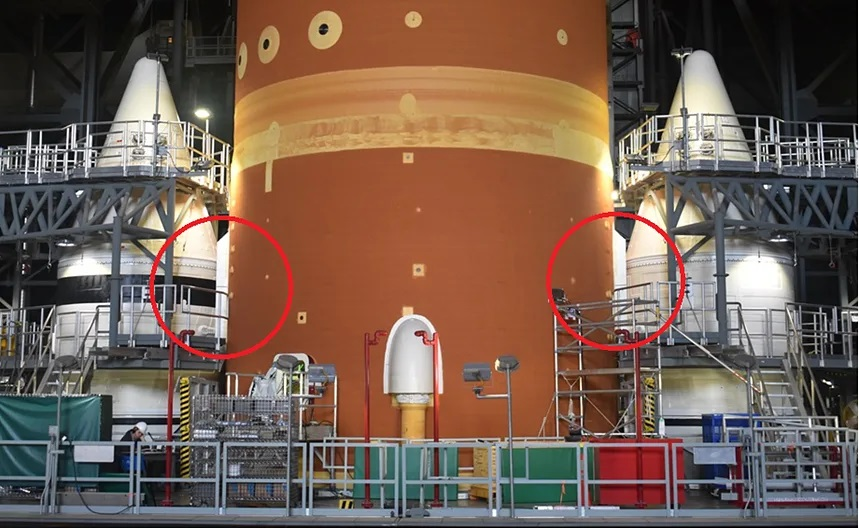
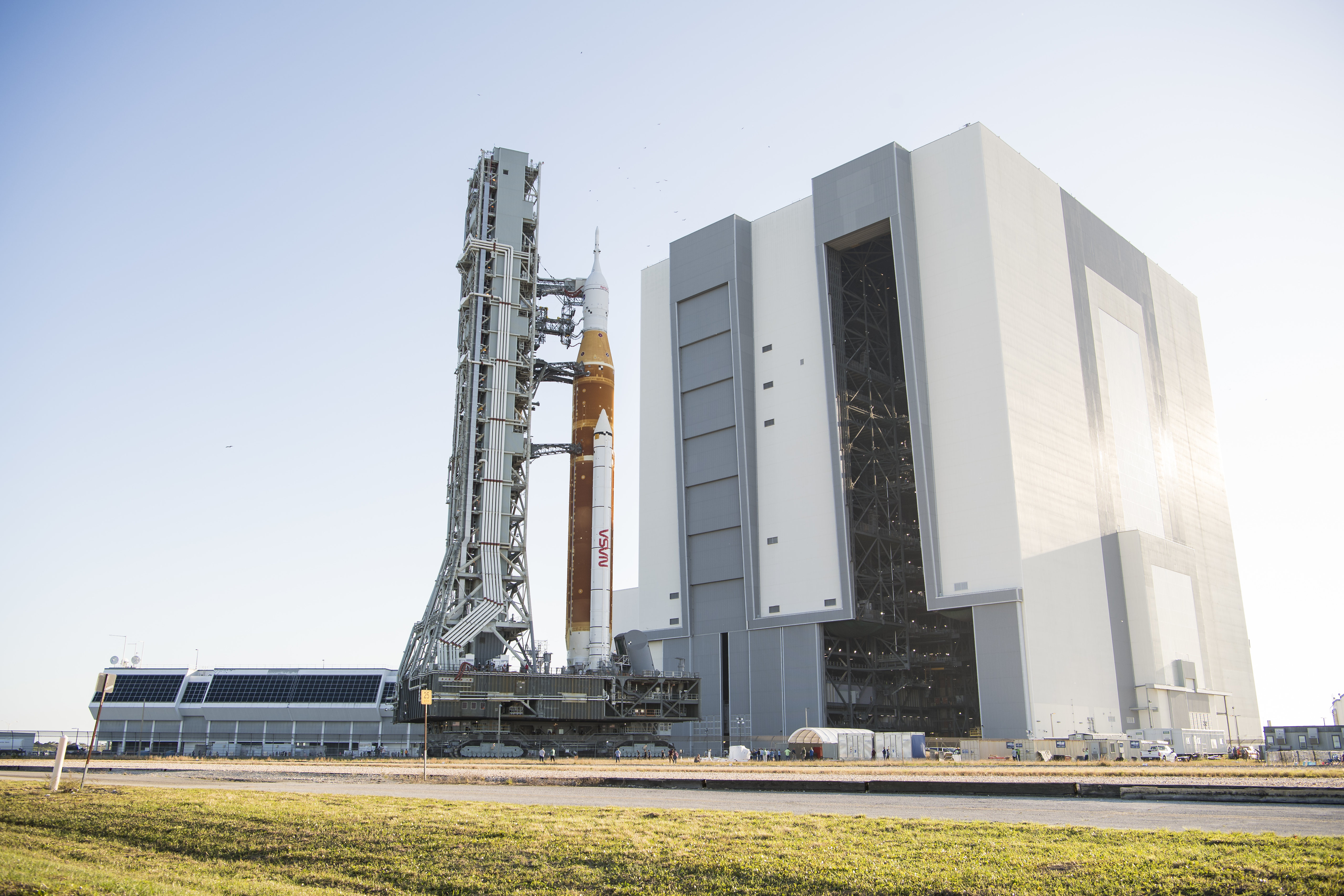
When NASA’s Artemis II moon rocket rolls out to Launch Complex 39B this weekend, sharp-eyed observers will notice something new on the core stage: four thin metal fins that weren’t there for Artemis I.

They’re called strakes, and they exist because the rocket’s first flight revealed a problem nobody fully anticipated.
After Artemis I launched in November 2022, Boeing and NASA engineers dug into the flight data and found that the Space Launch System experienced higher-than-expected vibrations near the points where the twin solid rocket boosters attach to the core stage. The culprit turned out to be turbulent airflow swirling through the gap between the boosters and the orange core stage during ascent—an aerodynamic nuisance that needed fixing before astronauts climbed aboard.

The fix itself is elegantly simple. Strakes are fin-like structures commonly used on aircraft to manage airflow, but they’d never been added to the SLS core stage. Boeing’s engineering team ran the numbers through wind tunnel tests and computational fluid dynamics simulations, then designed four strakes sized and positioned to calm the turbulence and dampen vibrations for Artemis II and all future flights.
Getting them installed on an already-aggressive schedule required some hustle on NASA and Boeing’s part. “We immediately pulled together a team—the best of the best,” said Brandon Burroughs, who led the strake implementation effort. “The team worked around the clock and even through the year-end break. By working closely with NASA and streamlining processes, we did in weeks what would normally be done in years.”

Before drilling a single hole at Kennedy Space Center, technicians practiced the procedure in Huntsville, Alabama. The strakes were ready to install before the core stage was fully stacked on the mobile launcher—a critical bit of timing that avoided the access headaches that would’ve come once the solid rocket boosters were in place.
It’s a small addition with big implications.
Artemis II will carry four astronauts on a roughly 10-day trip around the moon, the first crewed flight beyond Earth orbit in more than half a century. Every improvement to the rocket brings NASA one step closer to landing crews on the lunar surface—and eventually, Mars.

Author: Charles Boyer
NASA kid from Cocoa Beach, FL, born of Project Apollo parents and family. I’m a writer and photographer sharing the story of spaceflight from the Eastern Range here in Florida.


Leave a Reply