

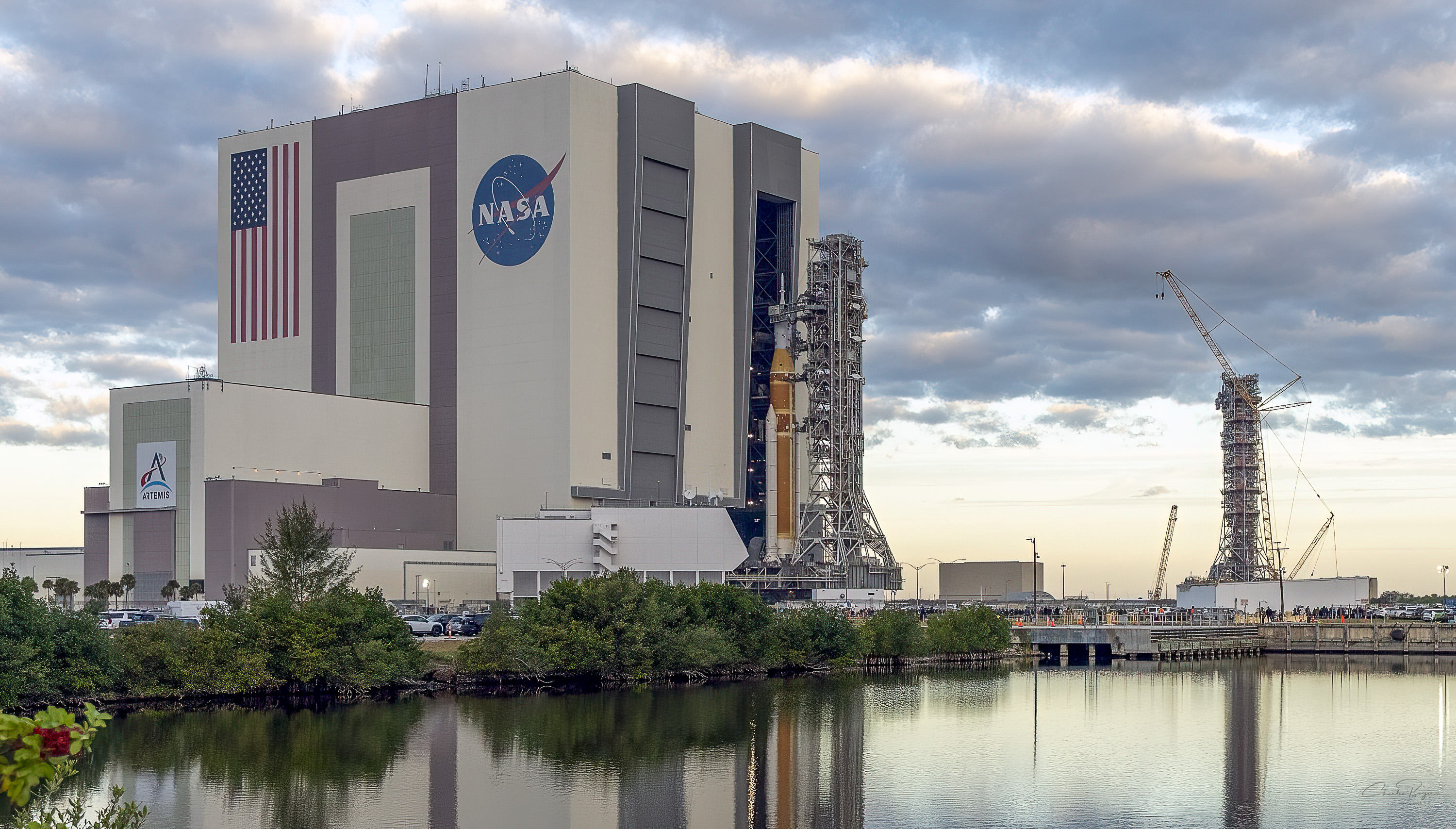
Blue Origin has raised New Glenn to its vertical launch position at LC-36A, with the 322-foot-tall set to liftoff this afternoon between 2:45 PM and 5:11 PM ET. Weather may be a concern, with acceptable conditions expected to fade as the afternoon progresses.
After booster separation, Blue Origin will attempt to land the GS-1 New Glenn first stage on Jacklyn, its automated droneship.
At A Glance
| Organization | Blue Origin |
| Location | Cape Canaveral SFS, FL, USA |
| Rocket | New Glenn |
| Pad | Launch Complex 36A |
| Status | Go for Launch |
| Status Info | Current T-0 confirmed by official or reliable sources. |
| Window Opens | Sunday, 11 / 09 / 2025 2:45 PM |
| Window Closes | Sunday, 11 / 09 / 2025 5:11 PM |
| Destination | Mars Orbit |
| Mission Description | Second flight of Blue Origin’s New Glenn carrying NASA’s EscaPADE dual-spacecraft mission (UC Berkeley) to study ion and sputtered escape from Mars and the energy/momentum flow through Mars’ hybrid magnetosphere. |
| Watch Live | Blue Origin Official Stream (YouTube) | Mission Page |
As of 7:34 PM Saturday November 8, 2025. Launch assignments and times are subject to change or cancellation at any time. Consult BlueOrigin.com for updates.

Photo: Charles Boyer / Talk of Titusville
Weather
The 45th Weather Squadron of Space Launch Delta 45 has released their latest weather forecast for tomorrow’s launch window: 65->55% GO.

An interesting area of concern is noted by the 45th: solar activity. Currently, NOAA forecasters expect moderate geomagnetic storms for the next seventy-two hours as additional Coronal Mass Ejections brush or strike Earth’s magnetic field, due to activity traced to active sunspot 4274.


Fortunately, the concern is rated low to moderate, so it’s worth keeping the corner of your eye on it.
Trajectory
Neither Blue Origin or NASA have provided any specific numbers, but the launch trajectory is expected to be ~28.5° — due east.

Payload
ESCAPADE is a pair of small, matching Mars probes built by Rocket Lab, with each carrying compact instruments to sample magnetic fields and charged particles around the planet. The sensor suite includes a magnetometer provided by NASA’s Goddard Space Flight Center and lightweight plasma instruments developed with university collaborators, sized for a dual-spacecraft flight.

Their job is to observe how the solar wind interacts with Mars’ patchy crustal magnetism and how that interaction helps strip the upper atmosphere. By flying in coordinated orbits, the two spacecraft can compare conditions at different points at nearly the same time, building a time-varying picture of Mars’ magnetosphere and ionosphere that a single probe would miss.

The mission is led and operated by the Space Sciences Laboratory at the University of California, Berkeley, which will command the spacecraft and manage science operations. Rocket Lab built and integrated the vehicles; Blue Origin provides launch services for the ride off Earth, with additional contributions from partners including NASA Goddard and industry and academic teams.
Launch Viewing: In Person
LC-36A is clearly visible all the way down Cocoa beach, the closest being the pier at Jetty Park. Also close to SLC-36 is The Banana River Bridge. This will be a relatively big launch, and if you plan to go to one of the more popular spots, go early.
| Spot | Approx. Distance | Sightline | Amenities | Notes |
|---|---|---|---|---|
| Jetty Park Beach & Pier (Cape Canaveral) | ≈8–10 mi | Clear ocean horizon; pad slightly south of due-east line | Parking (fee), restrooms, concessions | Fills early on major launches; allow extra time for port traffic. |
| SR-401 Observation Turnouts (Port Canaveral North Side) | ≈7–9 mi | Low coastal view across Canaveral harbor | Limited shoulder parking; no facilities | Arrive early; obey posted signs; bring water and sun protection. |
| Cherie Down Park (Cape Canaveral) | ≈9–11 mi | Beachline view; ascent over the ocean | Parking, restrooms, beach access | Neighborhood streets can clog; respect residential parking rules. |
| Cocoa Beach Pier | ≈11–13 mi | Open Atlantic horizon with pier foreground | Food, restrooms, paid parking | Good for photo framing; crowds vary by season and event size. |
| Alan Shepard Park (Cocoa Beach) | ≈12–14 mi | Broad shoreline horizon | Parking (often paid), restrooms, beach access | Arrive early on weekends; check for lot closures during events. |
| Lori Wilson Park (Cocoa Beach) | ≈13–15 mi | Unobstructed shoreline view | Parking, restrooms, boardwalks | Shade helps during long holds; wildlife area nearby. |
| SR-528/520 Causeway Pull-offs (Banana River) | ≈13–17 mi | Low river-level sightline; wide eastern sky | No facilities | Use only legal shoulder areas; stay well off traffic lanes. |
| The Space Bar — Courtyard Titusville | ≈12–16 mi | Farther angle but elevated rooftop view | Food & beverage, restrooms | Reservations may be required for big launches. |
If possible, watch one of the YouTube streams for the latest/greatest information. Things change pretty fast as the countdown heads towards zero, and Will Robinson-Smith on Spaceflight Now or the announcers on Blue Origin’s live stream will keep you up to date.
Remember that there is a delay between a launch stream and the actual countdown clock. That is simply because of physics: it takes time for the signal to travel from the launch site, through the Internet, and back down to your phone, resulting in a five to fifteen-second delay.
The Next Spaceflight mission page is an excellent resource to follow the countdown.
Launch Viewing: Online
| Streaming Source | Availability |
|---|---|
| Blue Origin YouTube (Official) | Typically ~30 minutes before liftoff |
| Blue Origin — Mission/Live Page | Updates + embedded stream when live |
| NASA Live (if simulcast) | TBD; often ~30–60 minutes prior |
| Spaceflight Now | About one hour prior to liftoff |
| NASASpaceflight | Live coverage one hour prior to launch |
| NextSpaceflight — Launch Page | Comprehensive launch info |

Author: Charles Boyer
NASA kid from Cocoa Beach, FL, born of Project Apollo parents and family. I’m a writer and photographer sharing the story of spaceflight from the Eastern Range here in Florida.



Leave a Reply