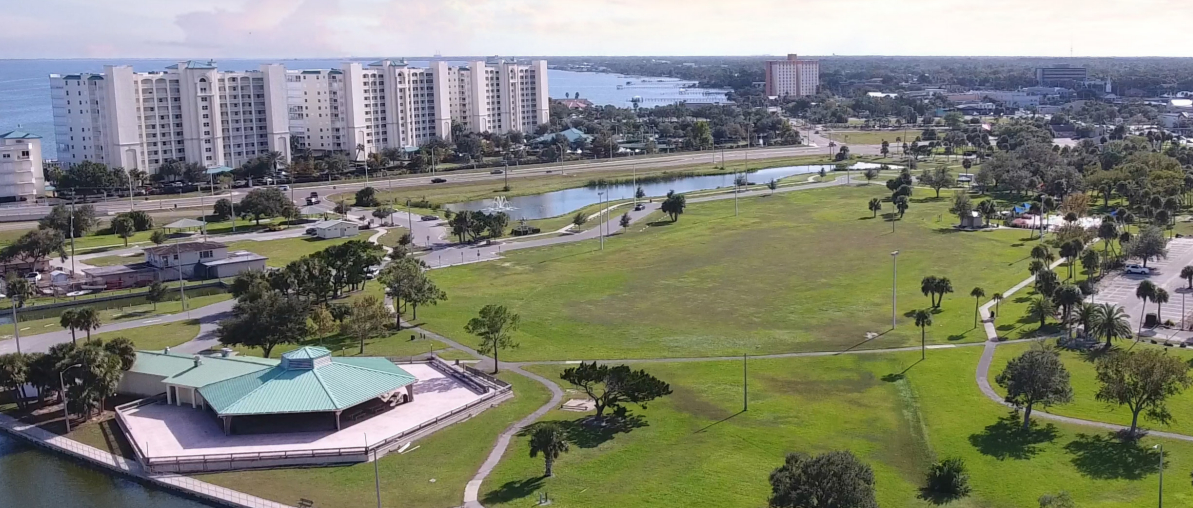


Photo: Mark Stone, Florida Media Now
By Mark Stone, Florida Media Now: A 71-year-old Chinese-born Canadian citizen, Xiao Guang Pan, has entered a guilty plea in a federal case involving unauthorized drone flights over Cape Canaveral Space Force Station.

According to court documents, Pan traveled to the U.S. on a tourist visa in early January and used a DJI Mavic Pro 3 drone to capture nearly 2,000 photos and videos—more than 250 of which showed military infrastructure including submarine docks, munitions bunkers, payload processing buildings and security checkpoints on federal defense property. A naval base located on the Cape Canaveral station frequently sees the comings and goings of US Nuclear submarines via the main channel of Port Canaveral.
A criminal information filed February 13, 2025, by the U.S. Attorney’s Office for the Middle District of Florida charges Pan with three counts of “using an aircraft for the unlawful photographing of a defense installation without authorization.” Each count carries a maximum penalty of one year in prison and a fine of up to $100,000.

Federal investigators reviewed flight logs showing Pan launched the drone on nine separate occasions between January 5 and 7. On January 5, from several miles away, he recorded two videos and 21 photos of launch complexes and contractor facilities using a telephoto lens. The following day, he moved closer, capturing an additional nine videos and 166 photographs from different angles—a day later, on January 7, Pan launched the drone from Class D controlled airspace outside the CCSFS restricted zone without FAA authorization, seizing images of roads, power lines, mission control buildings, fuel and munitions storage, and submarine infrastructure.
Pan maintained that he was unaware the drone was near a military installation, claiming it sent no alerts. But screenshots from his phone showed satellite images pinpointing “Cape Canaveral Space Force Station” at his takeoff point, and the drone’s flight data confirmed he did in fact receive violation warnings as he flew the drone. Pan maintains an Instagram account with dozens of photos of architecture and landscapes taken with his drone.


The investigation involved agencies such as Homeland Security Investigations, the Air Force Office of Special Investigations, the FBI, FAA, CBP, Federal Air Marshals, NASA’s OIG, and the Brevard County Sheriff’s Office. In his plea agreement, Pan acknowledged these details and agreed to the terms; prosecutors noted the document “does not include … all the events, persons involved, or other information relating to this case”.
Pan was released from custody to return to Ontario for medical treatment, citing concerns related to his coronary artery disease and diabetes.
His sentencing hearing is scheduled for October 1, 2025, in Orlando. If sentenced to the maximum for all counts, Pan could face up to three years in prison and fines totaling $300,000.
Concerns about drones spying on sensitive US facilities have heightened in the last year following a wave of suspicious drone sightings across the country. Even though most of those sightings have turned out to be hobbyists legally flying their drones, authorities remain concerned about spying by the Chinese. DJI, who makes the type of drone used by Pan, has been said by some to relay information to Chinese intelligence sources. That concern led to a ban on the use of DJI products by US agencies. Even so, DJI remains one of the most popular drone manufacturers in the world among hobbyists.

Talk of Titusville is republishing this story with permission from Florida Media Now, who is responsible for the content.

Author: Charles Boyer
NASA kid from Cocoa Beach, FL, born of Project Apollo parents and family. I’m a writer and photographer sharing the story of spaceflight from the Eastern Range here in Florida.



Leave a Reply