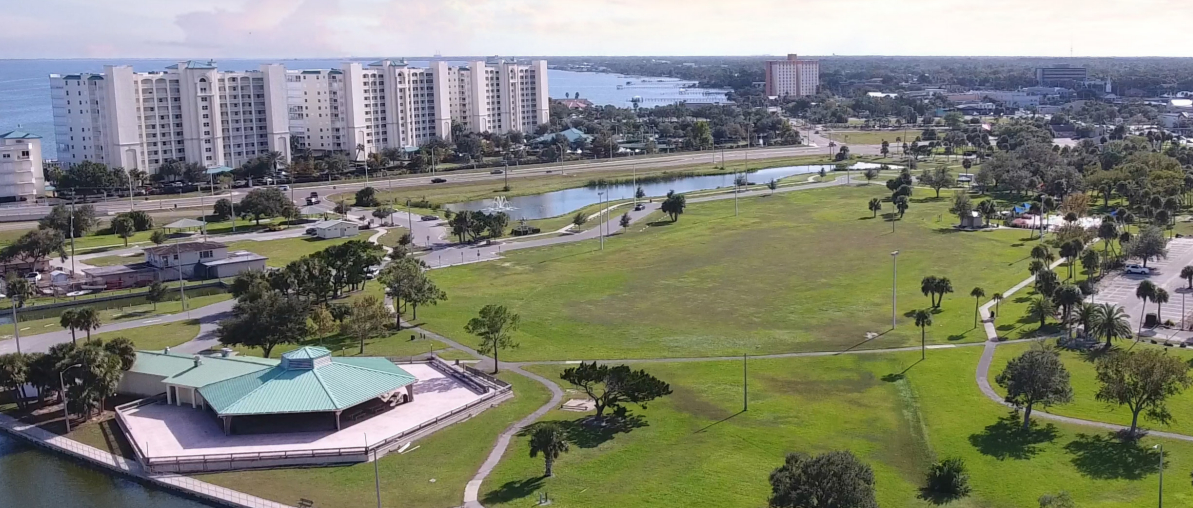


The skies surrounding the Cape are a very busy place: they are used by airliners heading to and from nearby Orlando International Airport, by private pilots who enjoy a plethora of airport choices in the immediate vicinity: two in the Titusville area, another on Merritt Island across the river from Cocoa Village, Orlando Melbourne International airport and others. And that’s before one considers military activity at Patrick Space Force Base, the Skid Strip at Cape Canaveral Space Force Station and of course the former Shuttle landing facility at Kennedy Space Center.

Keeping those skies safe and orderly for pilots and passengers is a gargantuan task before rockets are even considered, and once launch activities are added, things get even busier.
The FAA’s Role
The Federal Aviation Administration (FAA) oversees the licensing and safety of private and commercial aviation as well as commercial space launches and reentries, ensuring they are safely integrated into the U.S. National Airspace System (NAS). Their job is to protect people — whether in planes, on the ground, or at sea — from potential hazards during operations of both airplanes and rockets.
The pace of space launches and reentries is increasing steadily year over year, and to accommodate the increased traffic, the FAA is working to
- keep airspace open longer before closure;
- reduce how much airspace is closed and for how long;
- reopen airspace sooner after it is no longer needed;
- reroute only the aircraft directly affected by the operation;
- track space vehicles in near-real time during flight; and
- respond quickly to missions experiencing an anomaly.
Seven years ago, in 2018, the FAA shortened the period of time that airspace was closed for space operations from four hours to two, which provided some relief to aircraft trying to traverse the region around the launch.

Within the FAA, the Office of Commercial Space Transportation reviews whether space companies comply with licensing rules, including scrutinizing their flight safety analyses. Meanwhile, the Air Traffic Organization’s Office of Space Operations manages airspace use and enforces the Acceptable Level of Risk (ALR) policy to safely fit space missions into the NAS. These two offices work closely to apply the ALR policy effectively.

Factors Affecting Launch Licensing
In addition to vehicle safety relative to people and property, the FAA considers the following factors (in addition to other relevant factors) in determining whether a commercial space operation may proceed as requested or whether alternative approaches are required:
- The location and timing of the proposed commercial space operation
- The number of flights and/or passengers that will be affected by the operation
- Holidays or significant events that result in more NAS congestion generally or in specific areas of the country (e.g., Thanksgiving, Christmas, New Years, Spring break, Memorial Day, Independence Day, Labor Day, Super Bowl, significant military operations/exercises)
- Launch window duration
- Nighttime v. daytime launches: The FAA encourages commercial space operations to take place during nighttime hours (to the extent practicable) when other flight operations tend to be reduced
- Mission purpose: The FAA generally will prioritize commercial space operations that (1) have a national security purpose or are in the national interest and/or (2) commercial space launches carrying payloads
Those steps are taken to balance the needs of stakeholders utilizing the airspace in the launch corridor and are part of an Airspace Management Plan that is developed for each launch.
Aircraft Hazard Areas (AHAs)
Before any launch or reentry, the FAA designates Aircraft Hazard Areas (AHAs) to keep uninvolved aircraft clear of potential danger zones. The boundaries of these areas—covering location, size, and timing—are carefully calculated to keep the risk of an aircraft being hit by debris to less than one in a million.

Debris Response Area (DRA)
Beyond AHAs, the FAA can establish a Debris Response Area (DRA) as a backup safety measure. If a space vehicle malfunctions and debris enters the airspace unexpectedly, a DRA allows the FAA to swiftly reroute aircraft and block others from entering the affected zone.
A DRA is only activated if an anomaly occurs and only in airspace where the FAA can maintain reliable communication with pilots through surveillance and radio coverage. The DRA stays in effect until all falling debris from the launch has reached the ground.
Instructing Aircraft When a Debris Response Area is Activated
If a DRA is activated, the FAA will issue an alert to all affected aircraft and airports, provide individual aircraft instructions while it remains in effect, and issue a closeout alert when it is deactivated.
While the DRA is active, the FAA acts to mitigate the risk to aircraft exposed to falling debris. In general, the FAA will instruct aircraft as follows:
- Airborne aircraft inside the DRA and traveling to an underlying airport can continue and land.
- Airborne aircraft inside the DRA and traveling through are directed to exit expeditiously.
- Airborne aircraft outside the DRA but en route to it are directed not to enter.
- Aircraft at airports inside the DRA will not be cleared for takeoff.
- Aircraft at airports outside the DRA will be rerouted to avoid the DRA or be held on the ground.
The FAA airspace management plan for the launch, including pre-coordinated DRAs, is shared with international air traffic control partners and other stakeholders in advance of the operation; however, the DRA procedures are generally not applied in non-U.S. airspace.
The FAA, May 2025
Informing The Public
The FAA issues regular from the Air Traffic Control System Command Center, and it will advise of spaceflight activities:

They also issue NOTAMs, (Notice to Airmen), notifications issued to pilots and other aviation personnel to alert them about potential hazards or changes in the National Airspace System (NAS) due to space launch or reentry activities:

All of these activities require careful consideration and cooperation from all parties involved: launch operators, the Eastern Range, and the FAA itself. It is a complicated dance at times, and one that is sure to get even more complex as the launch rate from Florida increases.

Author: Charles Boyer
NASA kid from Cocoa Beach, FL, born of Project Apollo parents and family. I’m a writer and photographer sharing the story of spaceflight from the Eastern Range here in Florida.


Leave a Reply