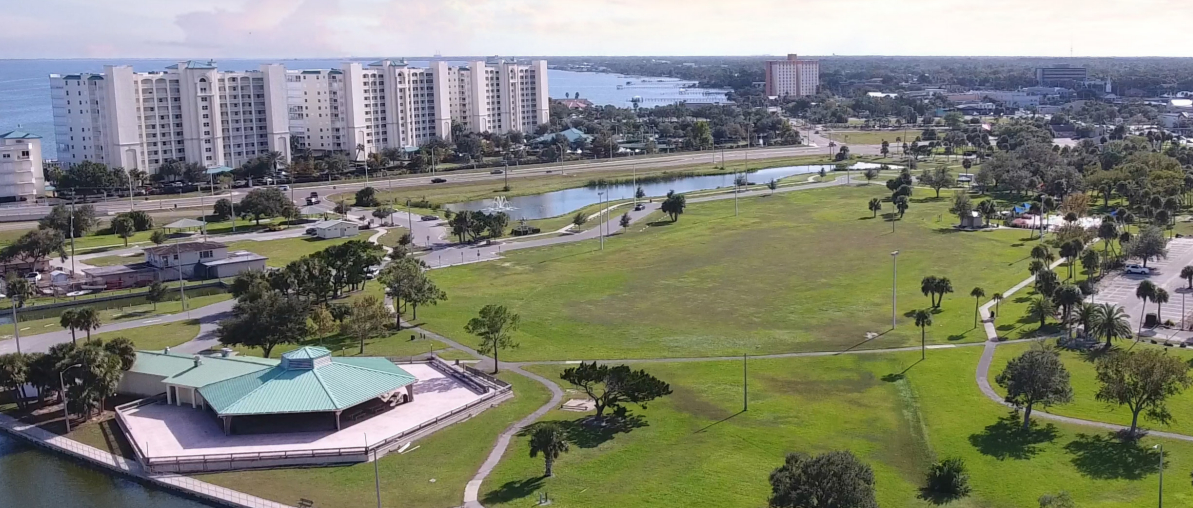


Photo: Charles Boyer / ToT
SpaceX is targeting a Falcon 9 launch of 22 Starlink satellites to low-Earth orbit from Space Launch Complex 40 (SLC-40) at Cape Canaveral Space Force Station in Florida this evening.

The launch window opens at 5:20 PM EDT and extends until 9:00 PM EDT. The backup window for this launch is Thursday, June 13, starting at 4:46 p.m. EDT.
Weather may be an issue, as heavy rains are forecast for the region today.
According to the National Weather Service at 10:30AM EDT today, “Showers and possibly a thunderstorm, mainly before 10pm, then a chance of showers and thunderstorms after 10pm. Low around 75. South southwest wind around 10 mph, with gusts as high as 20 mph. Chance of precipitation is 80%. New rainfall amounts between a quarter and half of an inch possible.”
Payload
22 Starlink Mini V2 satellites, to be used in SpaceX’s orbital-based Internet service.


Photo: SpaceX
Weather

The 45th Weather Squadron is forecasting a 95% chance of creating a Range Violation Thursday, meaning a mere 5% chance of acceptable conditions throughout the launch window. On Thursday, conditions improve slightly: 15% “Go”, with an 85%” Probability of Violation.
In their discussion, the 45th Weather Squadron states, “The Spaceport, and the remainder of the peninsula, will see very wet and unsettled weather conditions through the remainder of the week. The forecast question for both the primary launch opportunity Wednesday afternoon and backup on Thursday remains exactly where [a frontal] boundary drifts to, and how quickly a developing area of low pressure sets up off the northeast Florida coast. For Wednesday afternoon, models differ if weather for launch opportunities may be better earlier or later in the window.“

Sky Cover
The National Weather Service predicts cloud cover of about 80% tonight at the opening of the launch window.

Trajectory
The planned trajectory for the launch is northeast, or right-to-left if you are facing the Atlantic Ocean on Florida’s east coast. Depending on the time of day and the weather in their location, people living to the north of the Space Coast may see the rocket as it ascends.

Booster B1073
According to SpaceX, tonight’s booster previously launched “This is the 16th flight for the first stage booster supporting this mission, which previously launched previously launched SES-22, ispace’s HAKUTO-R MISSION 1, Amazonas-6, CRS-27, Bandwagon-1, and 10 Starlink missions. Following stage separation, the first stage will land on the Just Read the Instructions droneship, which will be stationed in the Atlantic Ocean.” and will be on its nineteenth mission overall. That’s Booster B1073.
B1073 last flew May 12, 2024, or thirty-one days ago.
| Booster B1073 | May 12, 2024 | |
| Flight | Mission | Date |
| 1 | Starlink 4-15 | May 14, 2022 |
| 2 | SES-22 | June 29, 2022 |
| 3 | Starlink 4-26 | August 10, 2022 |
| 4 | Starlink 4-35 | September 24, 2022 |
| 5 | HAKUTO-R | December 11, 2022 |
| 6 | Amazonus Nexus | February 7, 2023 |
| 7 | CRS-27 | March 15, 2023 |
| 8 | Starlink 6-2 | April 19, 2023 |
| 9 | Starlink 5-11 | June 12, 2023 |
| 10 | Starlink 6-12 | September 4, 2023 |
| 11 | Starlink 6-27 | November 8, 2023 |
| 12 | Starlink 6-37 | January 15, 2024 |
| 13 | Starlink 6-41 | March 4, 2024 |
| 14 | Bandwagon-1 | April 7, 2024 |
| 15 | Starlink 6-58 | May 12, 2024 |
Countdown Timeline
There are key events in the countdown that you may hear called out in launch coverage.
Remember that once Propellant Loading (T-minus thirty-eight minutes) starts, Falcon 9 is committed to the launch attempt. Because of the nature of the cryogenic fuels used to power the rockets, any hold precludes a later launch attempt the same day. While it only rarely happens, there have been occasions where that has happened, and a launch scrub is called for the day’s attempt.
SpaceX provides the following countdown milestones on their mission information page:
| Hours:Minutes:Seconds | Event |
| 00:38:00 | SpaceX Launch Director verifies go for propellant load |
| 00:35:00 | RP-1 (rocket grade kerosene) loading begins |
| 00:35:00 | 1st stage LOX (liquid oxygen) loading begins |
| 00:16:00 | 2nd stage LOX loading begins |
| 00:07:00 | Falcon 9 begins engine chill prior to launch |
| 00:01:00 | Command flight computer to begin final prelaunch checks |
| 00:01:00 | Propellant tank pressurization to flight pressure begins |
| 00:00:45 | SpaceX Launch Director verifies go for launch |
| 00:00:03 | Engine controller commands engine ignition sequence to start |
| 00:00:00 | Falcon 9 liftoff |
Typical SpaceX countdown timeline is presented for information purposes only.
Timeline of Falcon 9 Flight
SpaceX has published a timeline of expected events during the mission:
| Hours:Minutes:Seconds | Event |
| 00:00:00 | Liftoff |
| 00:01:10 | Max-Q (Moment of peak mechanical stress on the rocket) |
| 00:02:24 | 1st stage main engine cutoff (MECO) |
| 00:02:28 | 1st and 2nd stages separate |
| 00:02:35 | 2nd stage engine starts (SES-1) |
| 00:02:54 | Fairing deployment |
| 00:06:09 | 1st stage entry burn begins |
| 00:06:33 | 1st stage entry burn ends |
| 00:07:53 | 1st stage landing burn begins |
| 00:08:18 | 1st stage landing |
| 00:08:38 | 2nd stage engine cutoff (SECO-1) |
| 00:43:50 | 2nd stage engine starts (SES-2) |
| 00:43:52 | 2nd stage engine cutoff (SECO-2) |
| 00:52:44 | Starlink satellites deploy |
All events up to the end of the 1st stage entry burn should be visible for launch spectators watching the launch in person, so long as clouds are not blocking the viewer’s line of sight.
Watching Online
SpaceCoastLaunchCalendar.com will have a livestream of the launch if you’re not able to watch the launch in person: Livestream
SpaceX will have a livestream of the launch on their website: Starlink 10-2. This will also be available on the X platform. Coverage starts about five minutes before liftoff.
Spaceflight Now will have coverage of the launch starting about one hour before liftoff on Youtube: link
For official updates regarding launch times, SpaceX.com is the best source of information. Starlink launch times change from time to time, and the company generally updates their website within minutes of the decision to change the launch time. This is very handy if none of the streaming options on YouTube have started their broadcasts.
Remember that there is a delay between a launch stream and the actual countdown clock. That is simply because of physics: it takes time for the signal to travel from the launch site, through the Internet, and back down to your phone, resulting in a five to fifteen-second delay.
Next Space Launch an app for iOS and Android phones, has a real-time countdown clock that is accurate to a second, give or take. The app is free. Search the App Store or Google Play.
Launch Viewing: In Person
This morning’s planned launch is from SLC-40, on the south side of the Eastern Range (KSC and Cape Canaveral Space Force Station combined.) The southern parks in Titusville on Washington Avenue and FL-528/A1A in Cape Canaveral are the best spots to watch liftoff directly.
- Banana River Bridge on FL-528 W in Cape Canaveral
- Kennedy Point Park in Titusville
- Rotary Riverfront Park in Titusville
Restaurants With Good Launch Views
Given the early hours of the launch window (7:30AM – 11:30AM EDT) these restaurants may not be open for launch viewing. Later in the day, all three may well be, so if you are interested, be sure to call ahead to make sure they’ll be ready to serve you.
- The Space Bar ($$$) – atop the Courtyard Marriott near Kennedy Parkway
- New York New York ($$) – on the Indian River with an outdoor seating area. Is family-friendly.
- Shiloh’s ($$$) — located on the Indian River with an outdoor deck overlooking KSC/CCSFS
Indirect Views
There are several excellent viewing spots for SLC-40 launches that offer indirect views — meaning you won’t see the rocket until it clears obstructions such as trees, buildings, even a storm berm in one case.
- Jetty Park, Port Canaveral
- Fee required, much be purchased in advance: Port Canaveral Store
- It’s very possible to see a cruise ship coming or going.
- The pier especially has great views
- Cocoa Beach
- Parking fees (probably). Pay with your smartphone on the parking app. There are signs everywhere telling you how.
- Further away, but still good views.
- Northern Titusville Parks
- Further away, but really nice views.
Playalinda Beach
Playalinda Beach out on the Cape Canaveral National Seashore will be open to spectators until 8 PM EDT, that is if KSC Security and the National Park Service allow viewers for the launch. It opens to visitors at 6 AM.
Call ahead to be sure.
Cape Canaveral National Seashore • Playalinda Beach
Phone: (386) 428-3384 x0
Current operating hours: 6:00 AM–8:00 PM
If you are going to Playalinda, and if it is open, remember these general tips. Some may not apply to this particular launch.
- Get there at least two hours early, or better, earlier than that. Lines are long at the entry gate and they will only allow as many spectator vehicles as there are parking space available.
- If the launch L-0 time is moved to after 8PM, you must leave Playalinda, as the National Park Service is very strict about closing hours.
- Cape Canaveral National Seashore has a fee to get in and cash is not accepted. Debit and credit cards are okay, or if you have one of the National Park Service’s passes for the Seashore or the National Parks, that will work as well.
- Cellphone service is spotty at best and often non-existent at Playalinda. Don’t count on your cellphone to keep up with the launch; you might get a signal, or you might not.
- You are not allowed to view from the pullouts on Beach Road. Stanchions will block them. You’ll have to park and go to the beach.
- Refreshments are not available. There are no stores at Cape Canaveral National Seashore, so you’ll need to bring drinks and food if you want any while you’re there.
- Rangers will keep you back a certain distance from the launch area on the beach. Even if the beach is open, you’ll still be unable to go down to the fence that demarcates the normal security zone. There’s a line that spectators can’t go past somewhat north of the fence. That’s for safety and security.
Be prepared for potential changes or pushbacks in the launch schedule, and keep up by monitoring the live stream links mentioned above.
Keep up with launch news and other space events that affect the local area by subscribing to alerts when we publish a new article by entering your email at the link at the bottom of this page, or by visiting Space Talk here on the website. It’s free, and you can cancel at any time.

Author: Charles Boyer
NASA kid from Cocoa Beach, FL, born of Project Apollo parents and family. I’m a writer and photographer sharing the story of spaceflight from the Eastern Range here in Florida.


Leave a Reply