
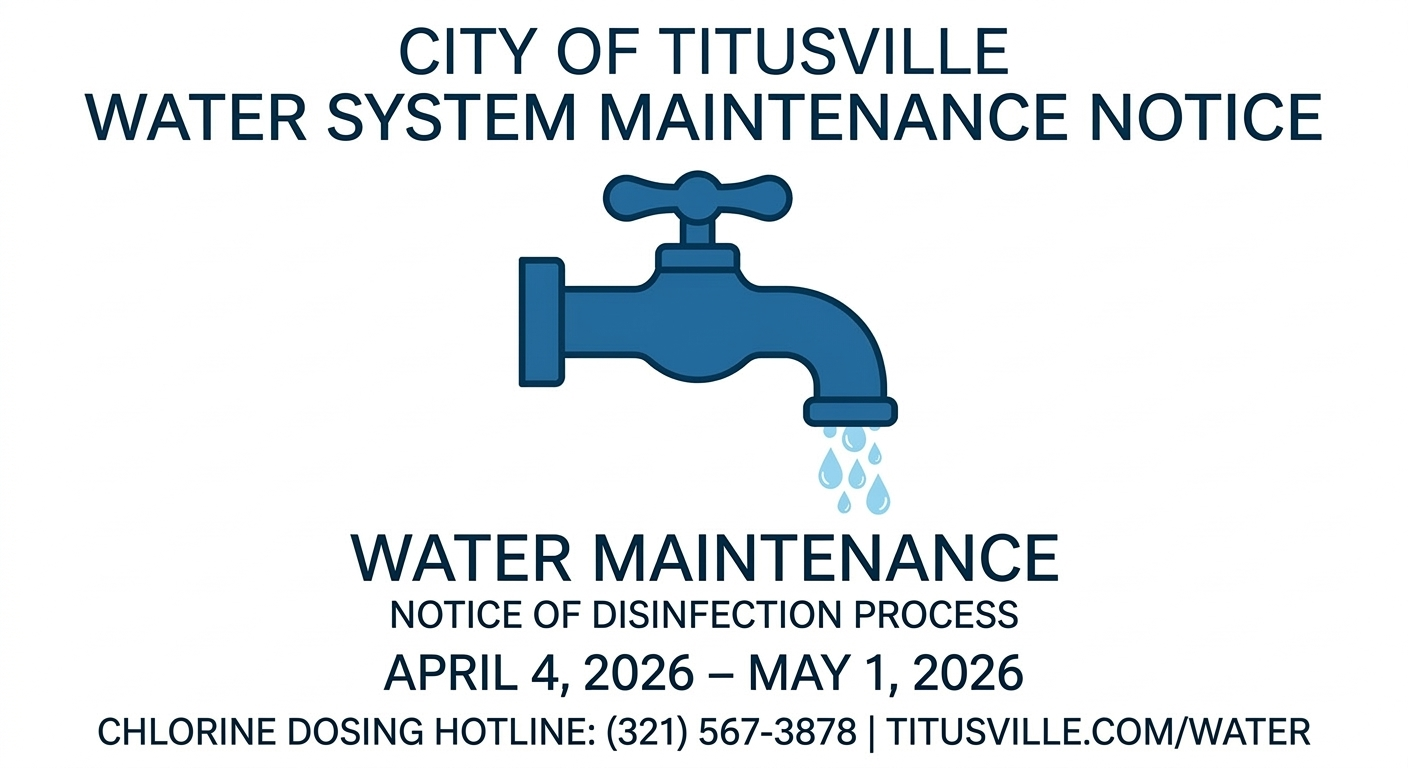
The City of Titusville Public Works Department has announced a temporary adjustment to its water disinfection process as part of routine maintenance to protect public health and ensure high water quality.
This maintenance period, also known as a free chlorine conversion, is scheduled to take place from April 4 through May 1, 2026. During this time, the city will suspend the addition of ammonia to the water supply while maintaining standard chlorine residuals.
This common industry practice helps eliminate microbes and biofilm that can grow inside the distribution system over time.
Residents should be aware that this temporary change in water chemistry will not affect the safety of the drinking water. The water remains entirely safe to drink and use for all household purposes. However, customers may notice a slight chlorine odor or a minor change in the taste or color of their tap water.
To assist with moving treated water through the system, city crews will be flushing water from fire hydrants throughout the maintenance period.

For those who are sensitive to the smell or taste of chlorine, there are several steps that can be taken to minimize these effects.
Running the tap for a few minutes before use or filling a pitcher and letting it sit for several hours allows the residual chlorine to evaporate naturally. Additionally, installing or replacing carbon filters on faucets and showerheads can help reduce sensitivity.
Specific groups should take extra precautions during this scheduled maintenance. Facilities such as hospitals, dialysis centers, and fish or amphibian sellers should be aware of the change as it may affect their specialized operations.
Dialysis patients and immunocompromised individuals are encouraged to consult their healthcare providers to determine if this change impacts their specific treatment. Similarly, fish tank and pond owners should speak with aquarium professionals regarding any necessary adjustments to their water treatment.
For the latest updates, residents can visit the Public Works Water Production Branch page at the city’s website or contact the Chlorine Dosing Hotline at (321) 567-3878.
Would you like me to draft a brief FAQ section based on this information to help answer common resident questions?

Author: titusvillemedia
Raised on the Space Coast, I want to keep North Brevard informed of what's happening. Send Tips / Story Ideas to TitusvilleMedia@gmail.com


Leave a Reply