


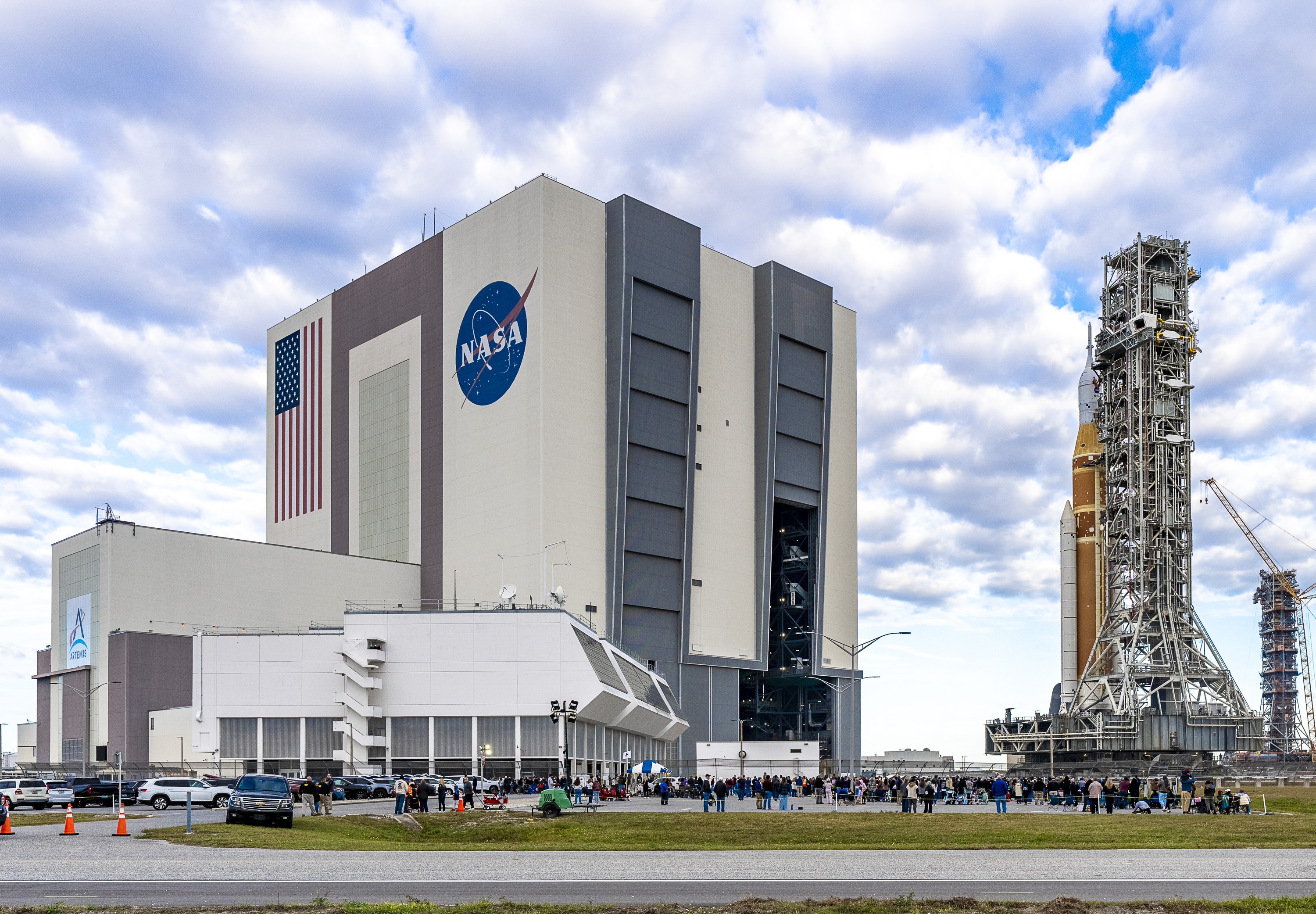
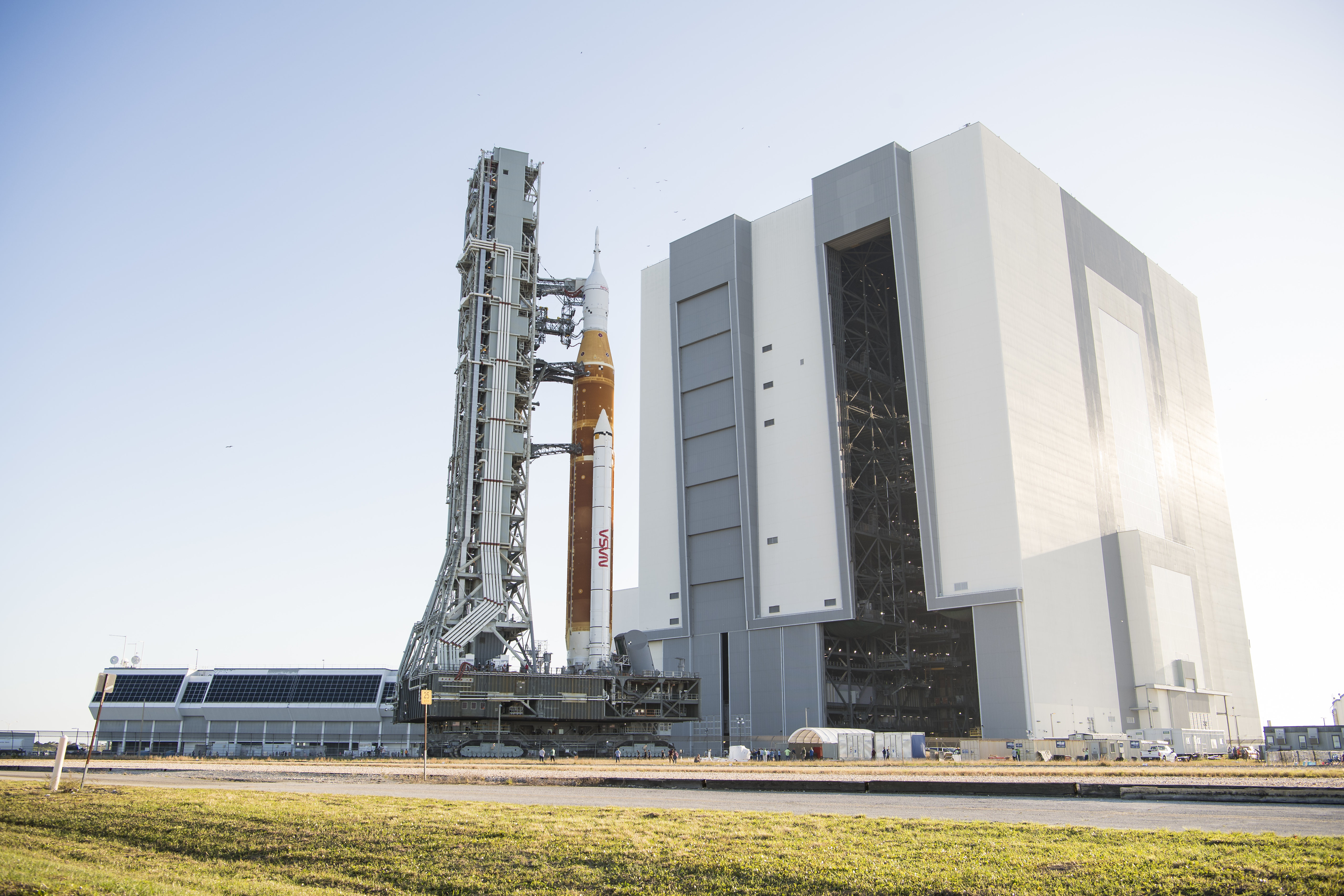
SLS began its slow and deliberate journey to Launch Pad 39B from the Vehical Assembly Building (VAB) early Saturday morning at Kennedy Space Center, marking a major milestone in the agency’s quest to return astronauts to the Moon for the first time in more than half a century.

The 322-foot-tall rocket emerged from the cavernous Vehicle Assembly Building at 7:04 a.m. EST, carried atop Crawler-Transporter 2 for the four-mile trek to the historic launch complex. The combined stack — rocket, Orion capsule, and mobile launcher — weighs approximately 11 million pounds and is traveling at a top speed of just under one mile per hour, with the journey expected to take between eight and twelve hours. At the time of this writing, that journey is still underway and should conclude late this afternoon or early this evening.

Hundreds of space center workers, family members, and guests gathered along the crawlerway to witness the spectacle as the towering white rocket inched past against a clear Florida sky. NASA Administrator Jared Isaacman and the four Artemis II astronauts were on hand to mark the occasion.
“Wow. LETS GO!!!” Commander Reid Wiseman posted on X alongside a photo of the rocket moving out of the VAB. In a subsequent post, he called the SLS and Orion “engineering art.”
Once the rocket reaches Launch Pad 39B, teams will immediately begin connecting ground support equipment, including electrical lines, environmental control system ducts, and cryogenic propellant feeds. Engineers will then power up the integrated systems for the first time to verify everything functions properly with the mobile launcher and pad infrastructure.

A wet dress rehearsal is scheduled for late January or early February. During this critical test, ground crews will load more than 700,000 gallons of cryogenic liquid oxygen and liquid hydrogen into the rocket’s tanks and conduct multiple countdown sequences, including several holds and recycles in the final minutes to validate launch procedures.

Artemis Launch Director Charlie Blackwell-Thompson said a February launch remains possible but emphasized that the timeline depends on the outcome of upcoming testing. “We need to get through wet dress,” she said during a pre-rollout briefing yesterday.
NASA’s launch window opens February 6, with additional opportunities on February 7, 8, 10, and 11. Due to the orbital mechanics governing the mission’s trajectory to the Moon, only about one week of launch opportunities exists each month, followed by roughly three weeks without viable windows.


Author: Charles Boyer
NASA kid from Cocoa Beach, FL, born of Project Apollo parents and family. I’m a writer and photographer sharing the story of spaceflight from the Eastern Range here in Florida.


Leave a Reply